There are regions where people go for the beaches, and gastronomy is a bonus. Costa Blanca is a rare case where it’s the other way around: more and more people come here specifically for the food, and the sea comes with it. The province of Alicante gathered 17 Michelin stars in 13 restaurants in 2026 — a density of talent that more famous destinations would envy.
What’s especially valuable is that these restaurants are scattered all along the coast and inland, from fishing ports to mountain towns. This is a ready-made gastronomic route: you can plan a whole trip from one star to another. Below is the full 2026 map, from the only three-star temple to cozy family projects with one star. With cities, chefs, and the reasons why you should book a table.
The pinnacle: three stars — Quique Dacosta (Denia)
Let's start with the absolute peak. Quique Dacosta in Denia is the only restaurant with three Michelin stars in the entire Valencian Community and one of the main landmarks of world gastronomy.
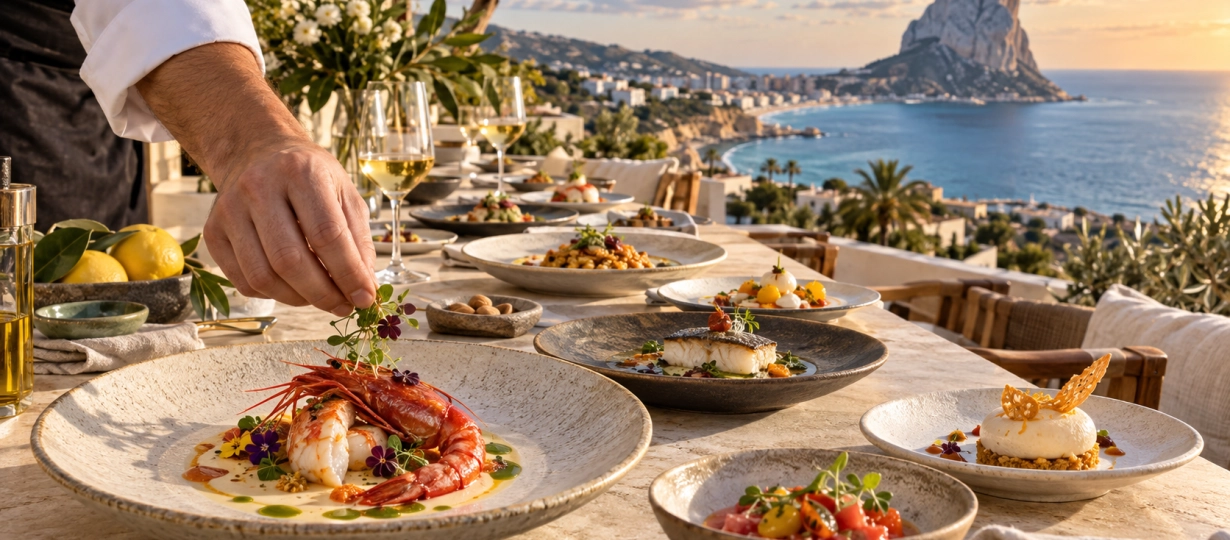
The story of its rise is impressive. Quique Dacosta received his first star in 2002, the second in 2006, and the third in the 2012–2013 season, coinciding with the restaurant’s renaming to its current name. His cuisine is built on the beauty, ecosystem of the Montgó massif, and the red shrimp of Denia as an undisputed icon. A signature detail: red shrimp is the only dish that appears in all tasting menus season after season.
This is not a dinner, but an event you prepare for in advance. This season, for example, there is the "Octavia" menu for 315 euros, created from the chef's most iconic products. You need to book a table months ahead. If you choose only one gastronomic experience on the Costa Blanca — this is it.
Two stars: intellectual cuisine of the inland province and coast
The second tier consists of two restaurants that prove the greatness of Costa Blanca is not only on the shore.
L'Escaleta (Cocentaina). One of the most respected addresses inland. Creative cuisine that elevates the recipes of mountainous Alicante to haute gastronomy. Famous for its rice dishes served on a wooden tray and the "zero table" concept. A pilgrimage site for those who appreciate a connection with the territory and the product.
BonAmb (Xàbia). A project on the Marina Alta coast — a homage to the region's history. Here they use ancient techniques like salting and fermentation to interpret the sea and garden with the highest elegance. One of the most coherent restaurants in the province in terms of identity.
One star: ten reasons for a gastronomic journey
The true strength of Costa Blanca is revealed in the one-star category — an exceptional density of talents spread along the coast and inland. Ten restaurants, each with its own character.
Baeza & Rufete (Alicante city). A must-stop in the provincial capital. Joaquín Baeza builds cuisine based on studying olive oils and wild herbs.
Audrey's by Rafa Soler (Calpe). Elegance and local product hand in hand — one of the strongest offerings in Marina Alta.
Beat (Calpe). José Manuel Miguel masterfully combines French technique with Mediterranean soul.
Orobianco (Calpe). High Italian cuisine with a breathtaking view of the Peñón de Ifach rock — the only Italian Michelin-starred restaurant in Spain.
Casa Bernardi (Benissa). Ferdinando Bernardi offers a deeply personal interpretation of Italian cuisine rooted in Alicante products.
Peix & Brases (Denia). Sea and fire — a modern, honest interpretation of coastal cuisine.
La Finca (Elche). Chef Susi Díaz crafts sensual and elegant cuisine rooted in product and emotion.
El Xato (La Nucía). A century-old tradition reinterpreted with creativity and modernity.
Casa Pepa (Ondara). A sincere culinary experience inspired by memory and Mediterranean roots.
Tula (Xàbia). A small but powerful project where the product is the true main hero.
How to read this map: three routes
To turn this list into a plan, here are three logical ways to follow it.
Marina Alta route (northern coast). The most starred area: Denia (Quique Dacosta, Peix & Brases), Calpe (Audrey's, Beat, Orobianco), Benissa (Casa Bernardi), Xàbia (BonAmb, Tula), Ondara (Casa Pepa). In a few days, you can gather a whole constellation within a half-hour drive radius.
"Capital and south" route. Baeza & Rufete in Alicante itself plus La Finca in Elche — perfect for those based in the city or flying in through Alicante-Elche airport.
"Inland" route. L'Escaleta in Cocentaina and El Xato in La Nucía — for those who want to see that Costa Blanca’s gastronomy does not end at the sea edge but goes into the mountains.
What you need to know before booking
Some practical points will save you nerves and money.
First — book in advance, especially the top addresses. Quique Dacosta and two-star restaurants are booked weeks or even months ahead. Spontaneous visits are almost impossible.
Second — a tasting menu takes time. Allocate 3–4 hours for a starred dinner and don’t plan anything important afterward. It’s a marathon of flavors, not a quick lunch.
Third — seasonality matters. Many menus change with the season, and iconic products like Denia’s red shrimp are best in their season. Check the current menu when booking.
Fourth — a star is not just about price but also identity. The strength of Alicante lies not in a couple of famous names but in a widespread network of good tables all along the coast and inland. The combination of tradition — sea, garden, mountains — with innovation makes the province a constant point of reference in national and international rankings.
Thirteen restaurants, seventeen stars, one province. Costa Blanca has long ceased to be just a beach destination — it is a full gastronomic map where every address tells its own version of the Mediterranean. Now you just have to choose which star to start with.




Comments