Cáceres: An Ice Cream, a Glance, Storks on Stone
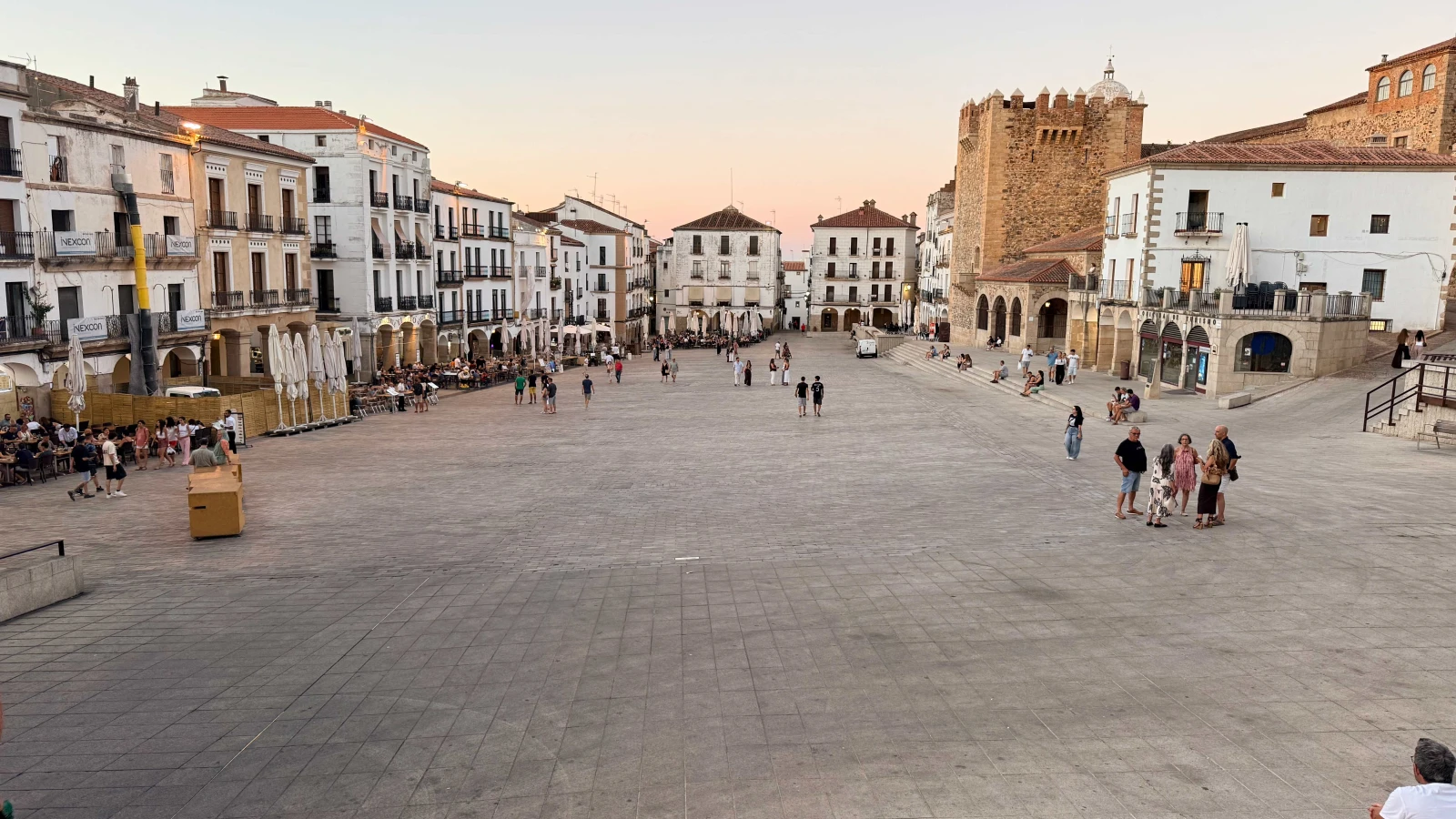
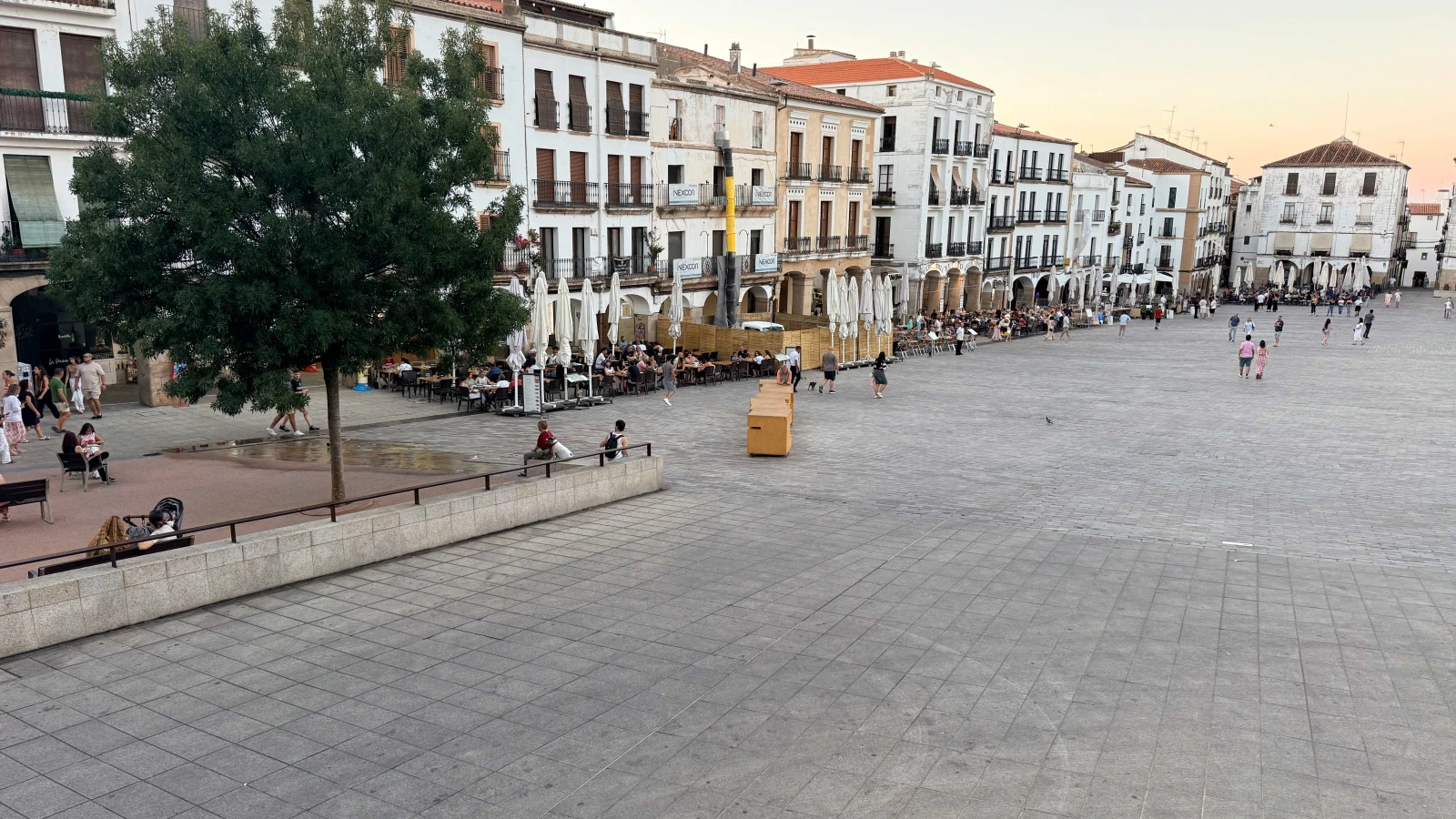
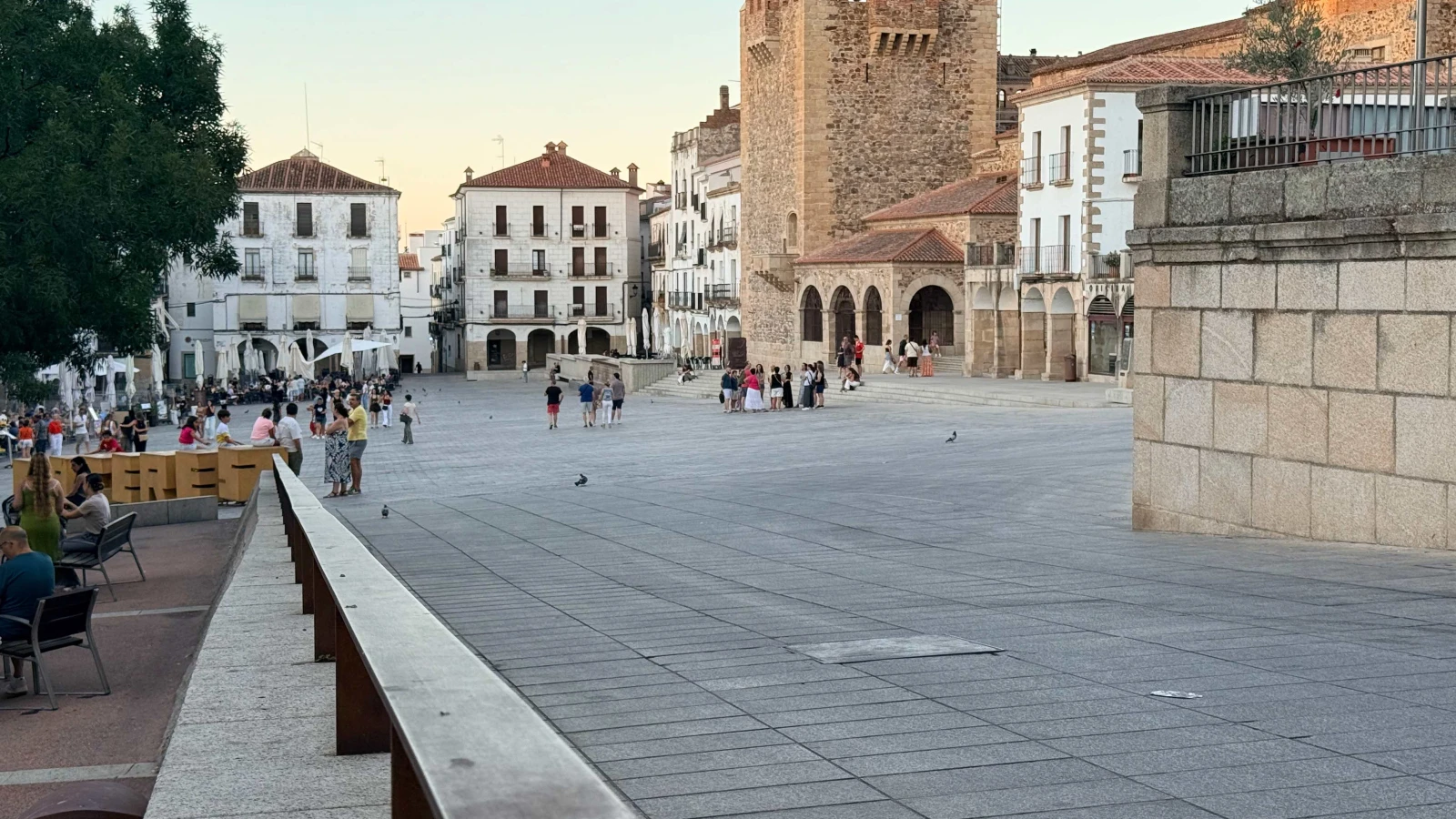
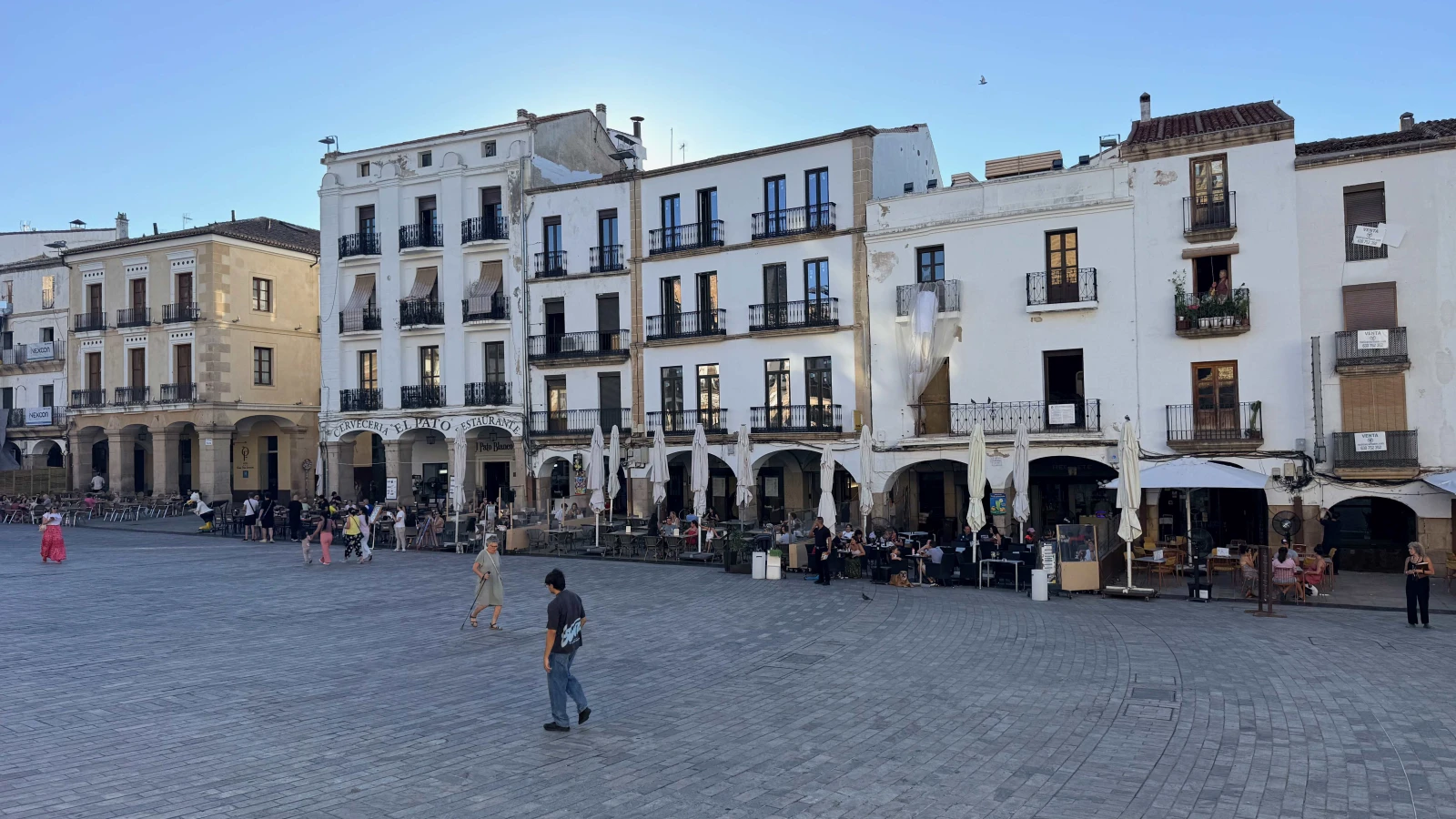
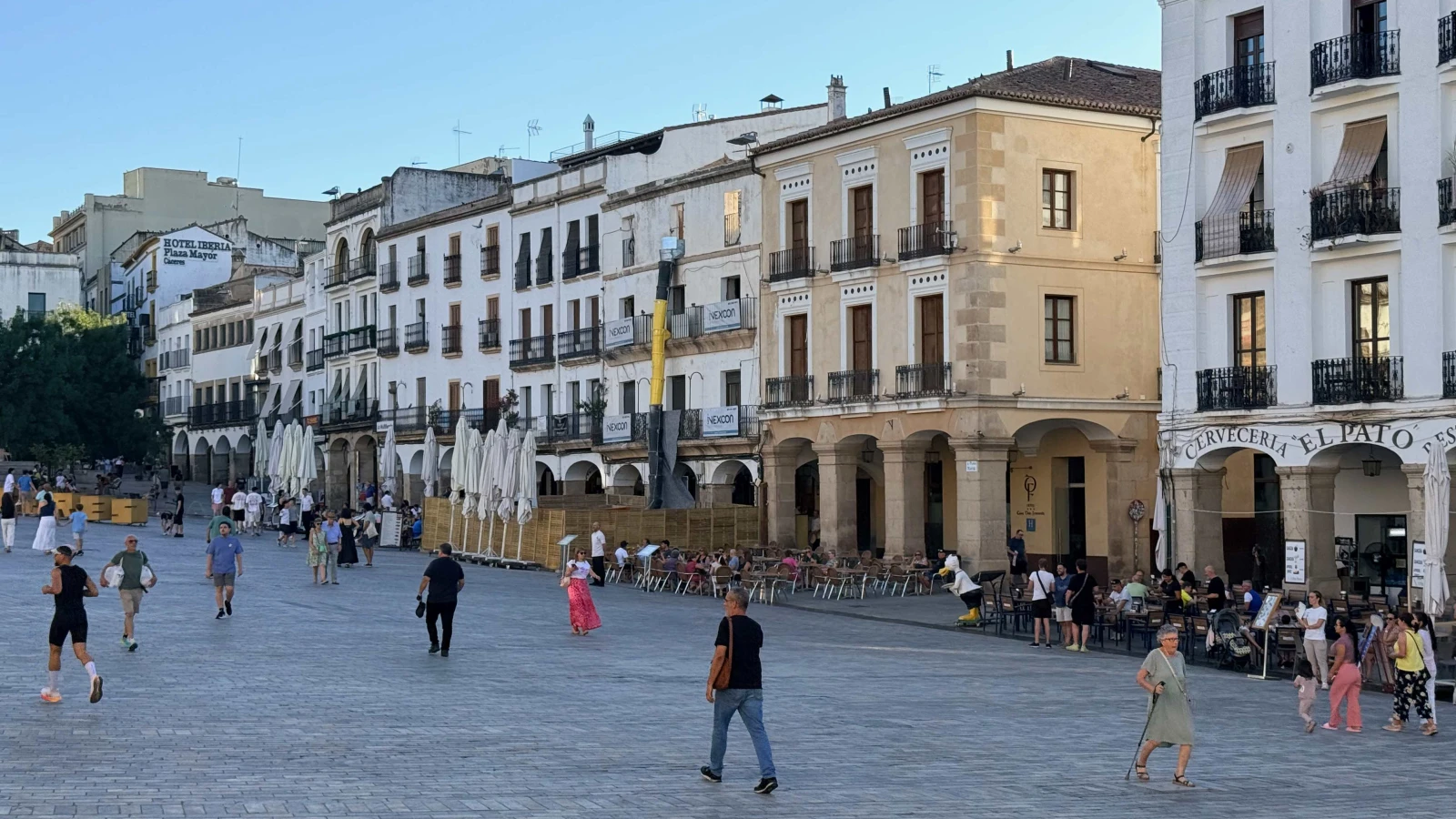
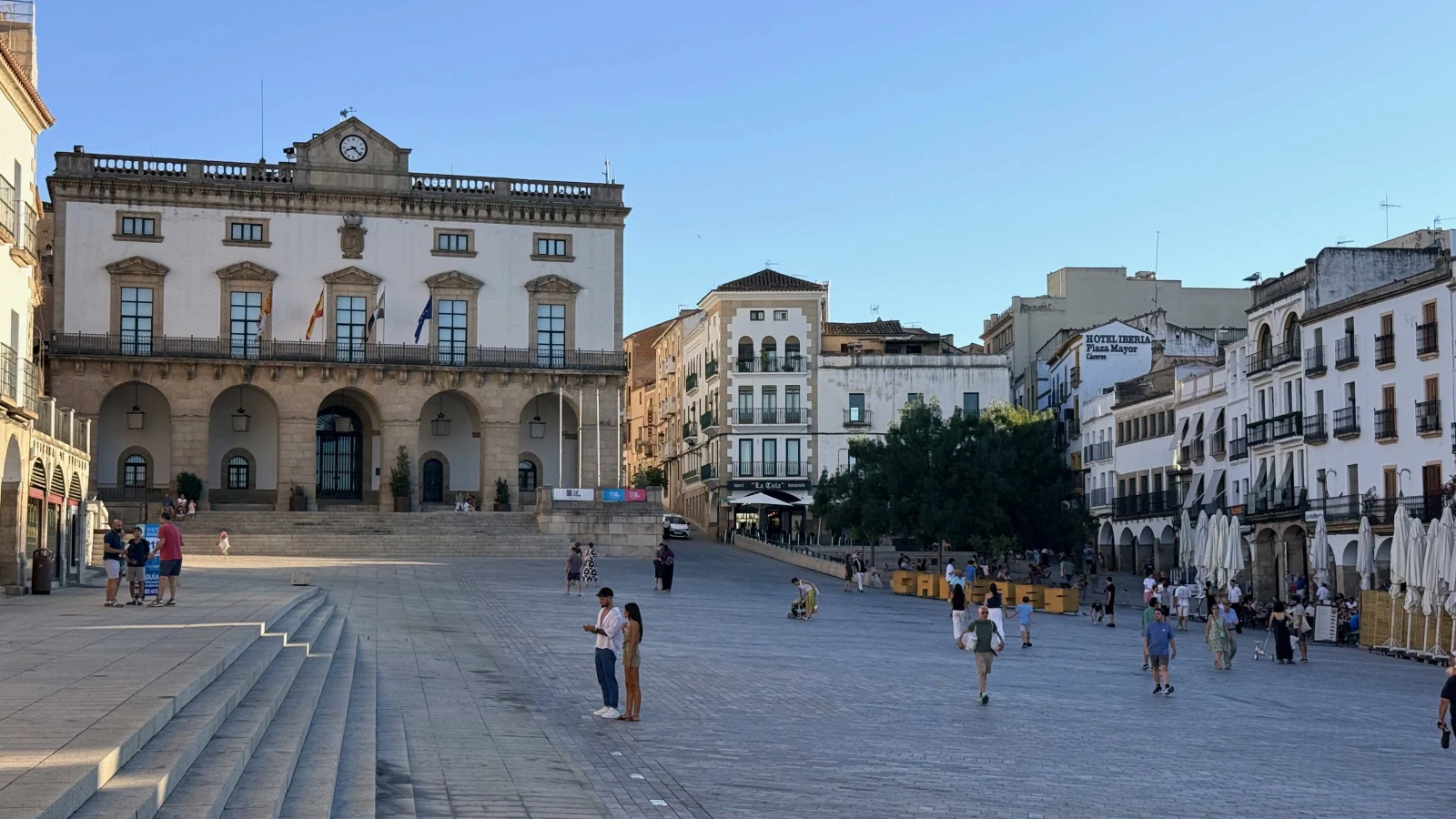
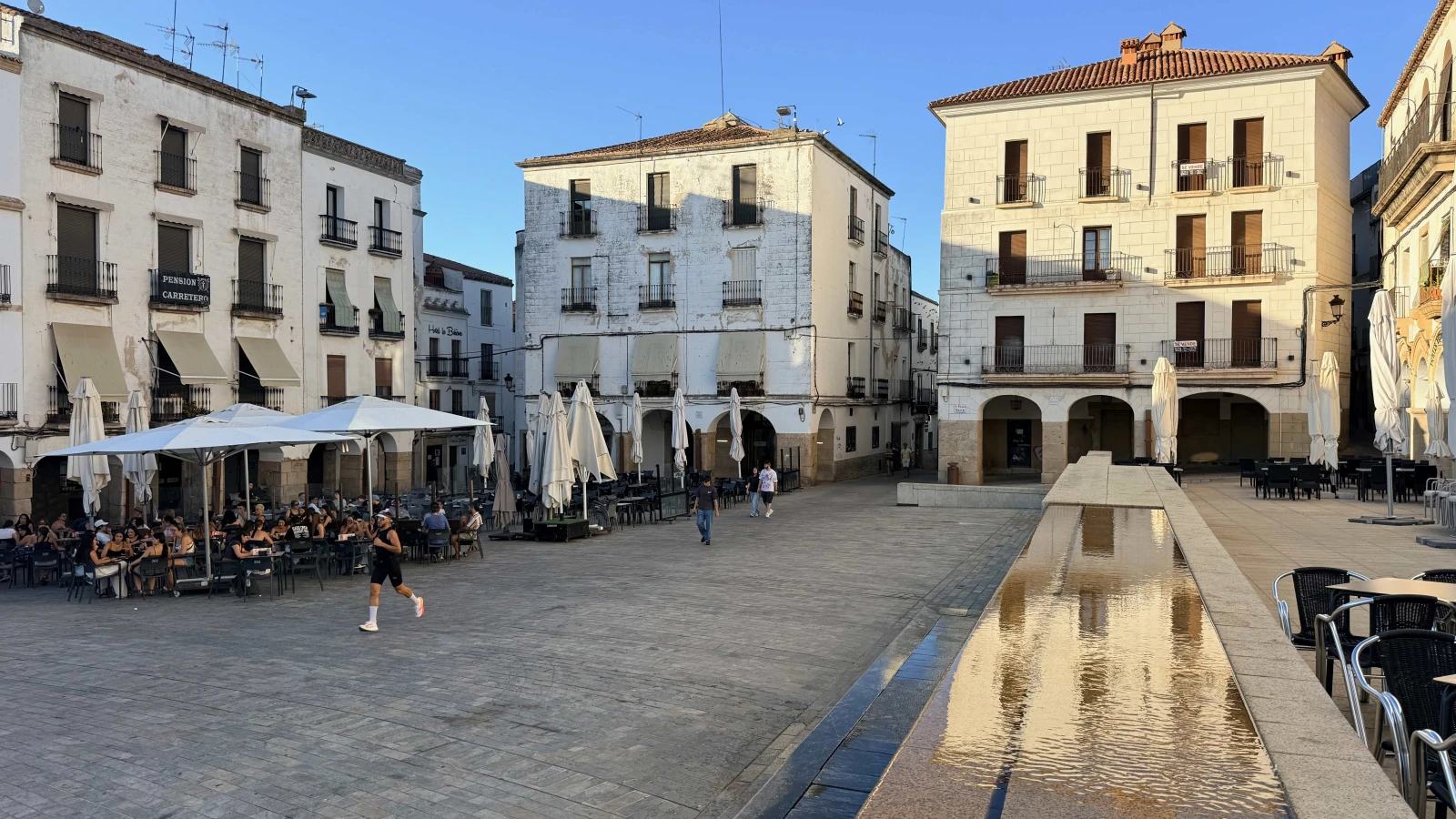
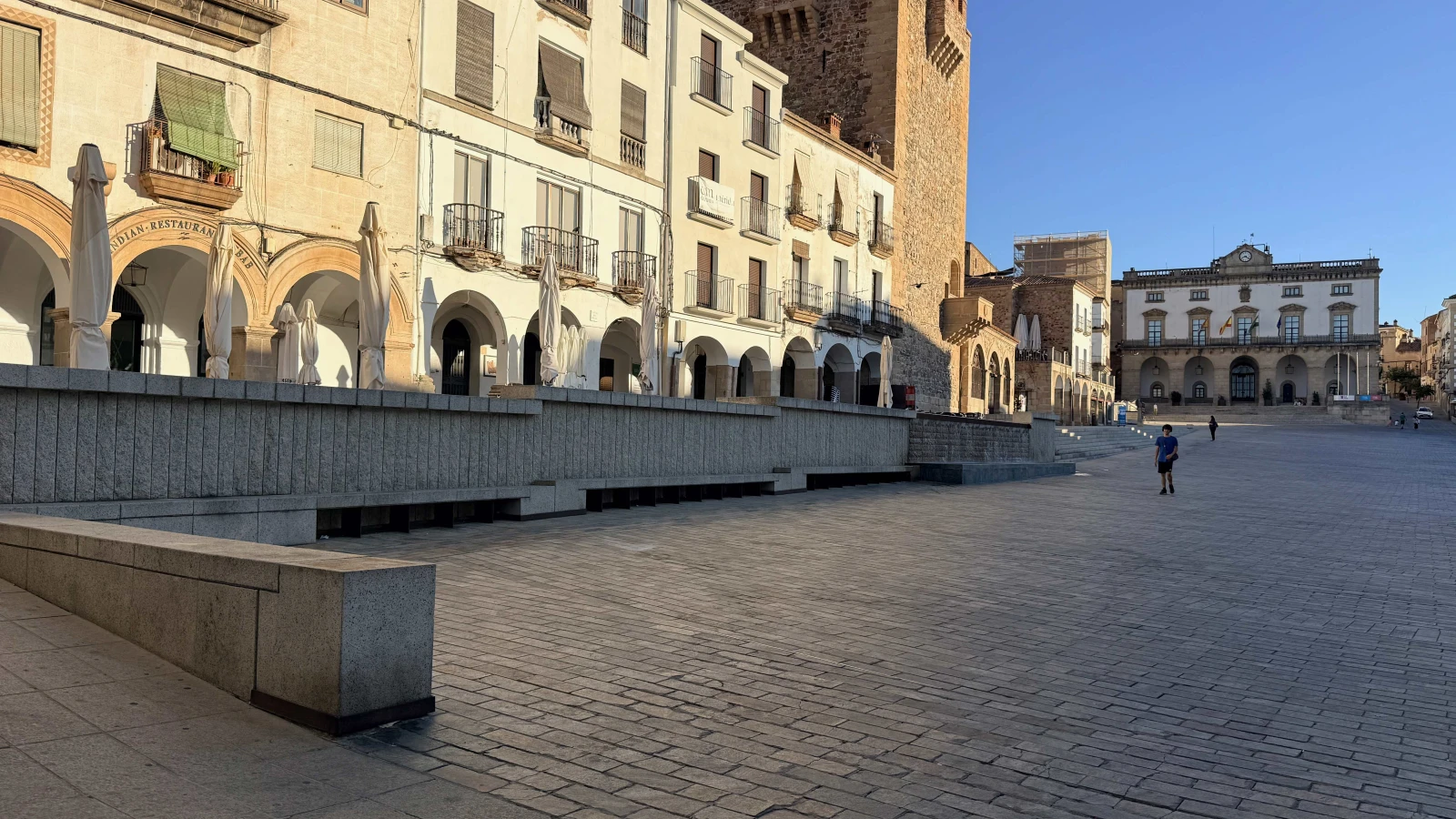
Come, sit down for a moment. On the Plaza Mayor, there is still a free bench under the arcades, the stone is still warm from the afternoon, although the sun has already disappeared behind the Torre de Bujaco. We only arrived in Cáceres today, and tomorrow we are already leaving — one of those short stopovers that teach you more than the long ones, precisely because you don’t have time to get used to anything.
I bought an ice cream. Zuky knows what that means even before I have paid: He gets the rest, the cone and all, the soft part at the very bottom, where the ice cream has already become half liquid. He knows it so well that he doesn’t even wait until the end. He sat down in front of me on the cobblestone pavement, looked me directly in the eyes, and seriously began to hypnotize me. You don’t want this ice cream anymore. Give it to me. A thin thread of drool ran from the corner of his mouth and dripped onto the stone between his paws.
You might say: Pavlovian effect, and I understand why — but that’s not quite right. Pavlov’s dogs learned to drool at a bell that had nothing to do with food itself; that was the trick, the displacement, the bell as a substitute for the sausage. What Zuky does needs no learning — it is the oldest reflex of all, food in front of the nose, saliva in the mouth, no detour necessary. The only thing he has trained himself, and not himself but me, is the look, the sitting, the patient staging of waiting. He has trained that on me, over four years, one ice cream after another. It works. It always works.
The Square and Its Towers
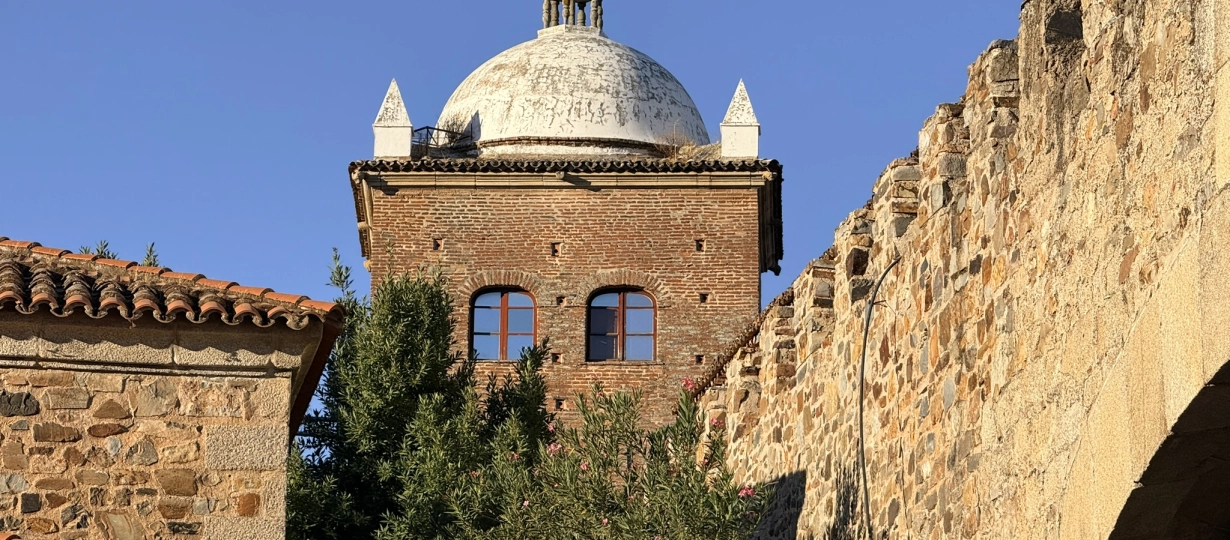
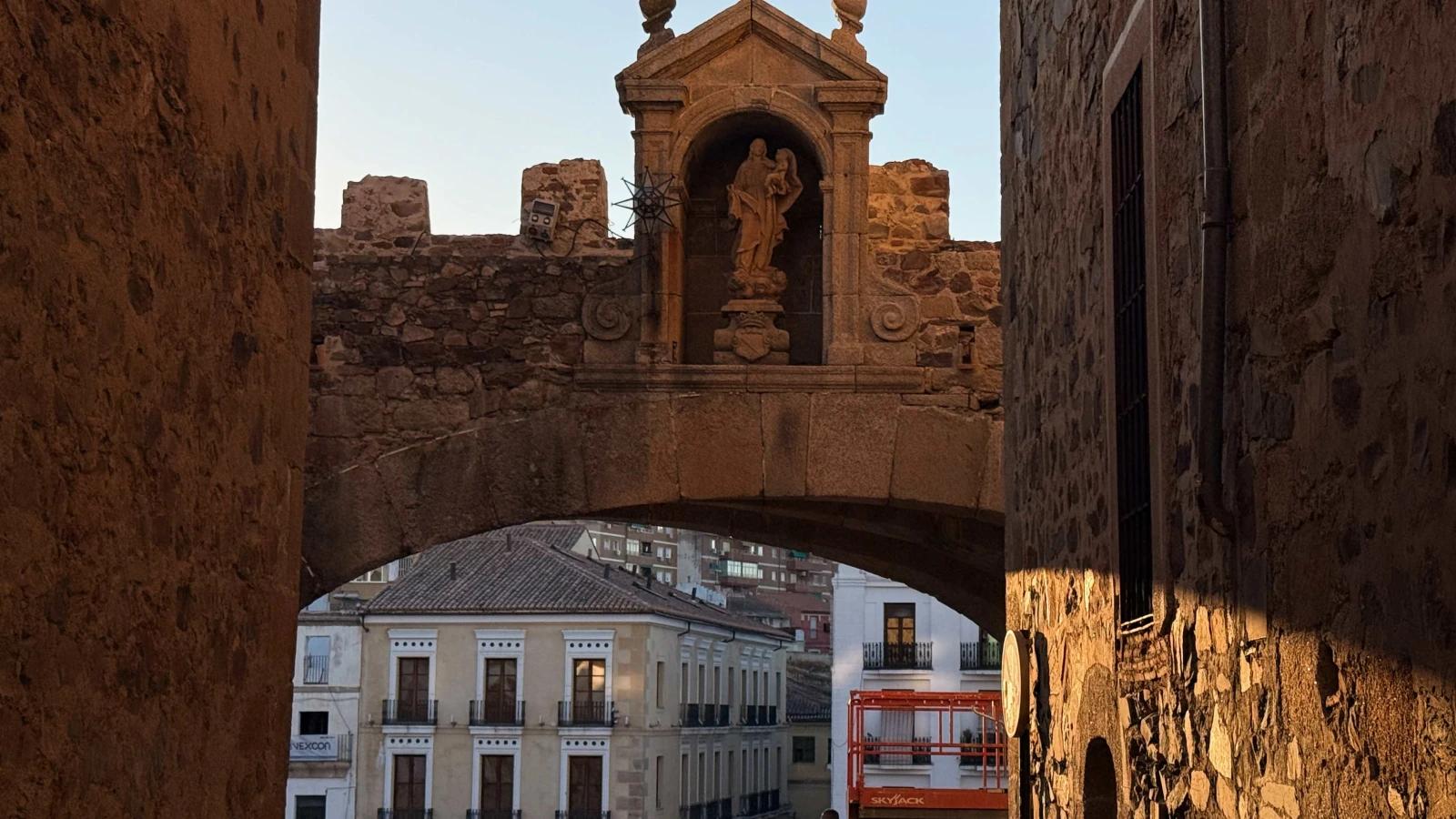
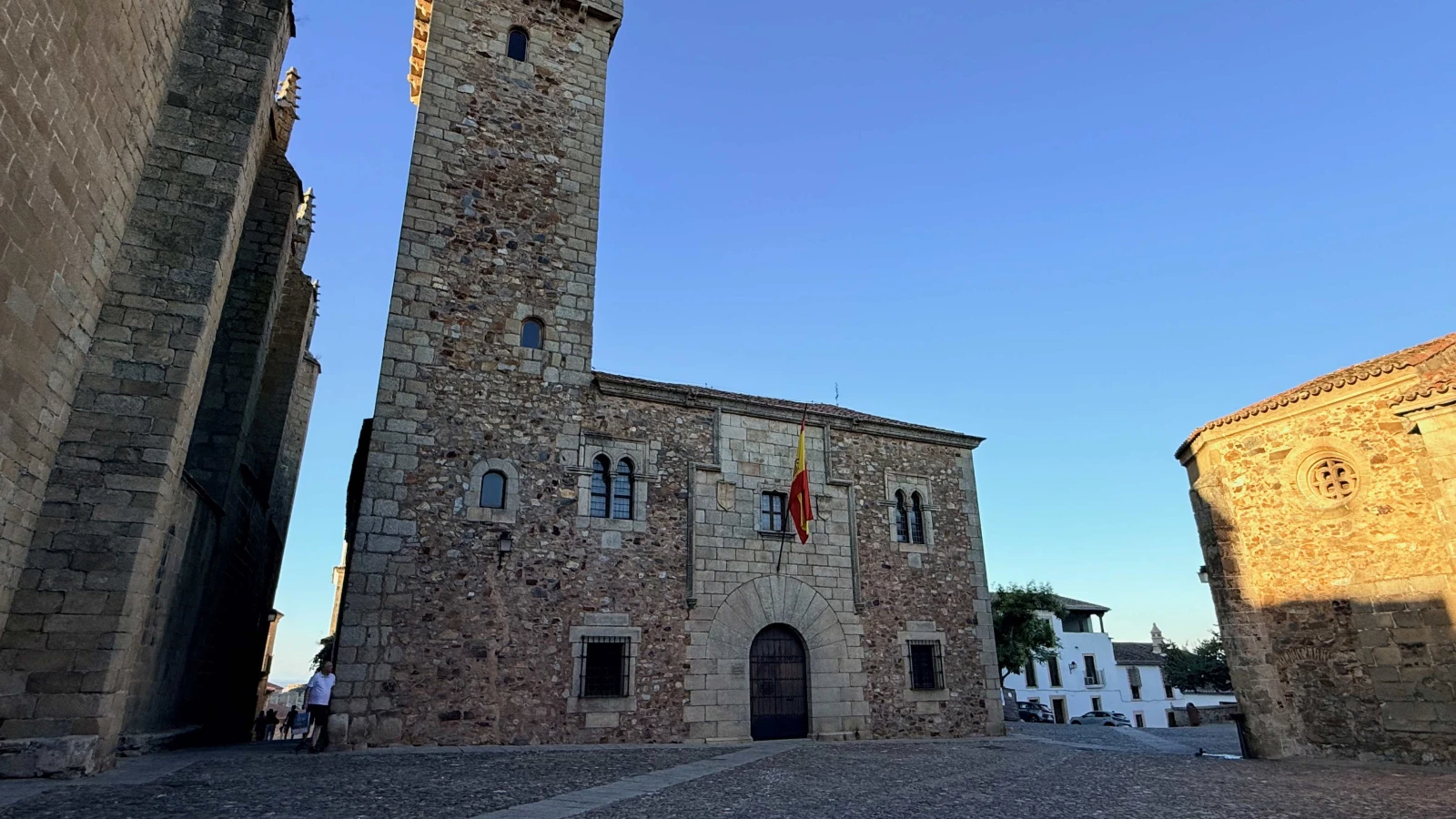
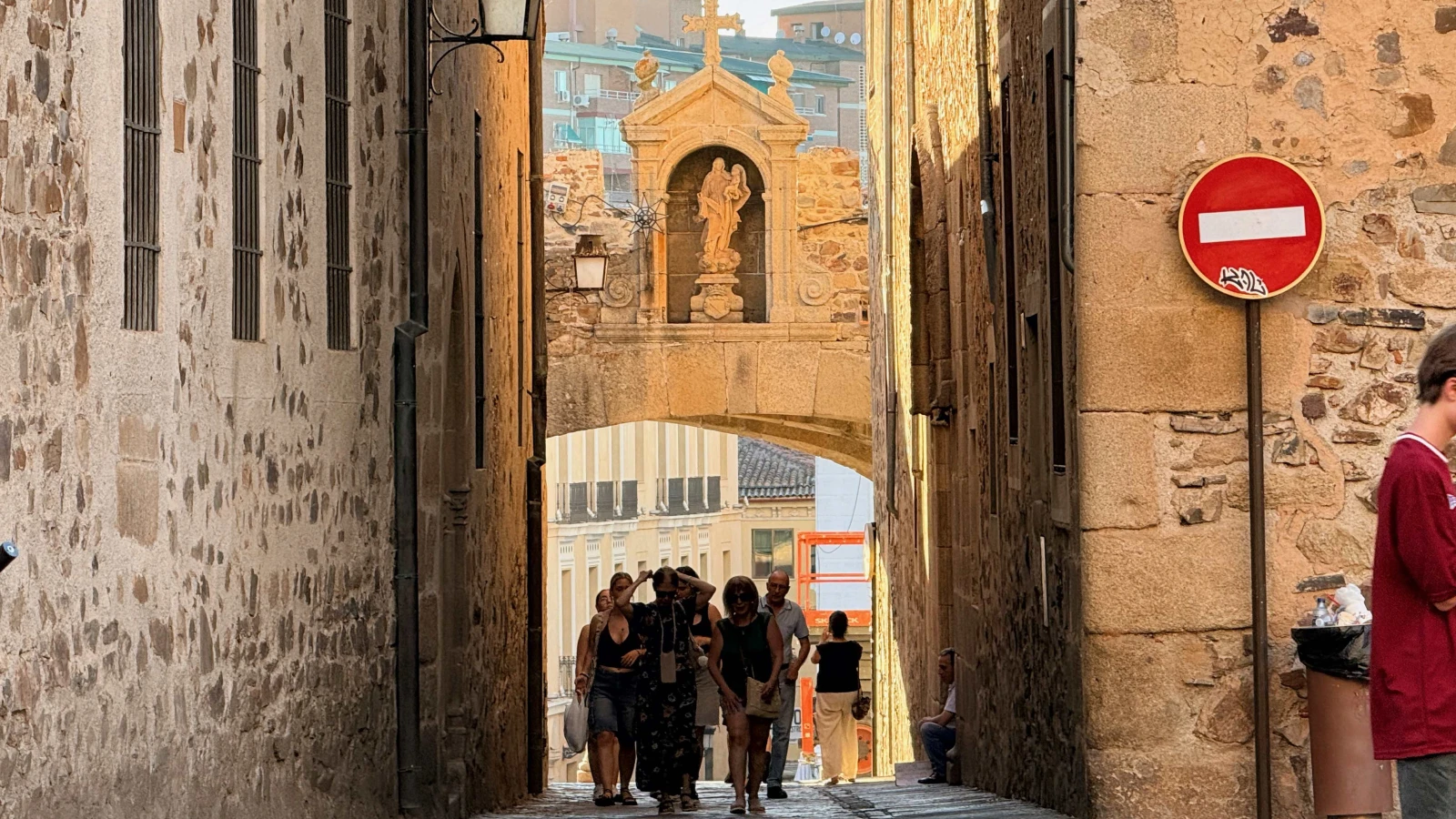
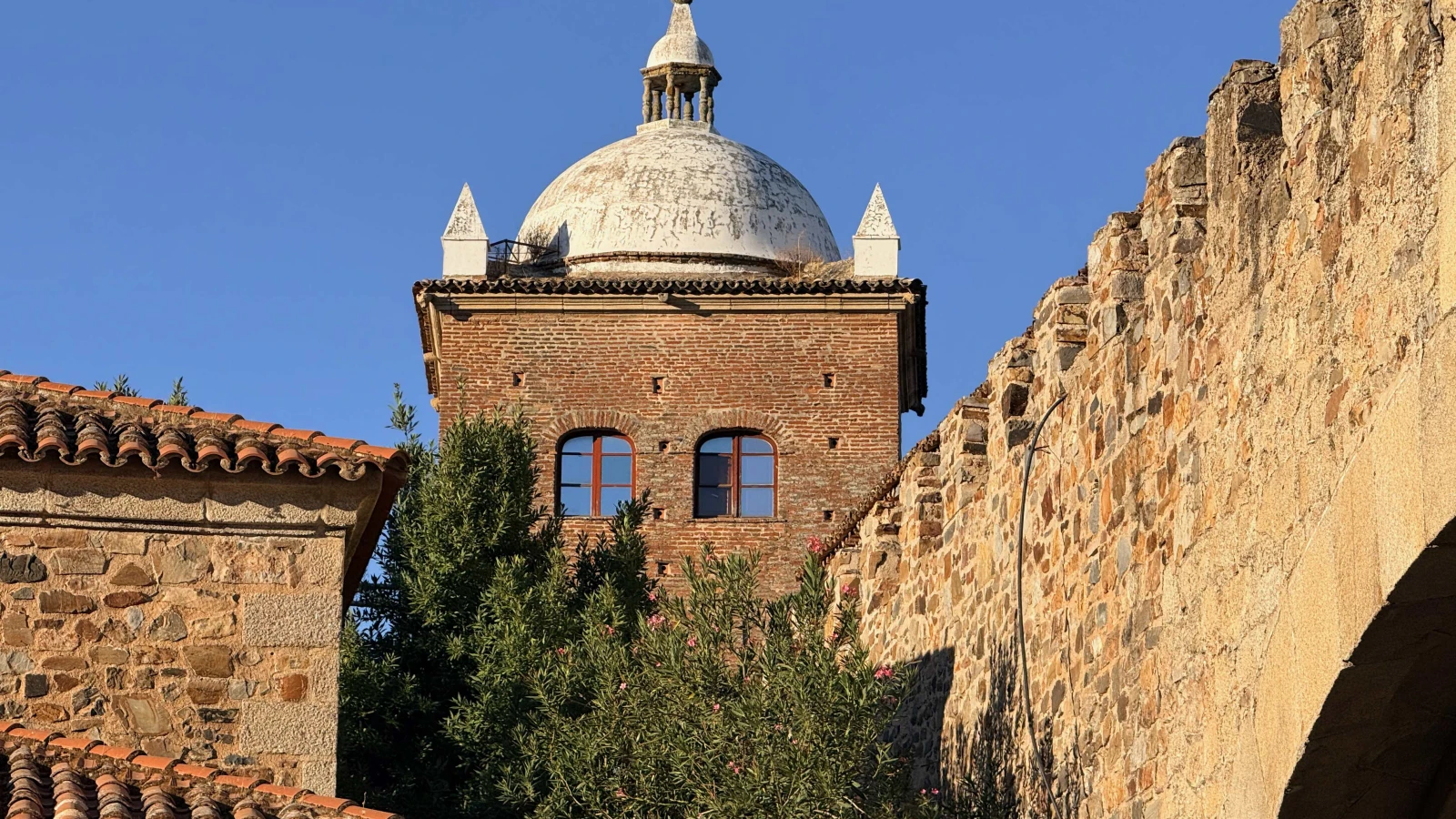
The Plaza Mayor of Cáceres is less a square than a stage that the medieval city has built for itself. On one side, the arcades and cafés, ordinary and pleasant. On the other side, growing directly from the pavement, the old city wall with its towers: the Torre de Bujaco, built in the twelfth century by the Almohads on Roman foundations, beside it the slimmer Torre de los Púlpitos and the Arco de la Estrella, an eighteenth-century gate that Ventura Rodríguez had built into the wall so that carriages could finally pass through. Beyond this arch lies the walled city, and the ordinary world simply ends.
On the Torre de Bujaco now, this evening, storks stand motionless, just as they stand on almost every tower and bell gable in this city. Cáceres has more storks per roof than any other place I know, and no one here finds that remarkable. It has always been that way.
Within the Walls
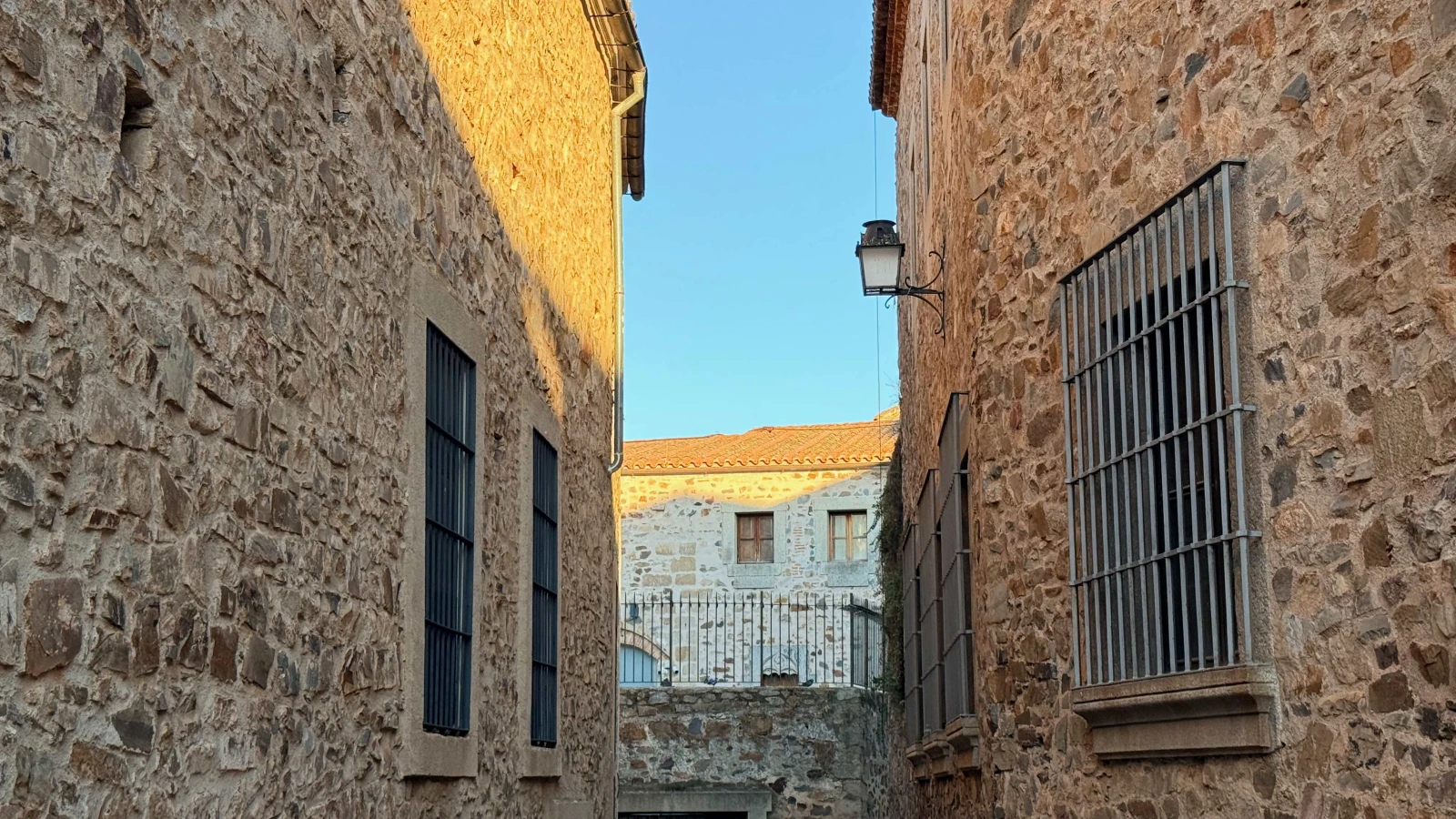
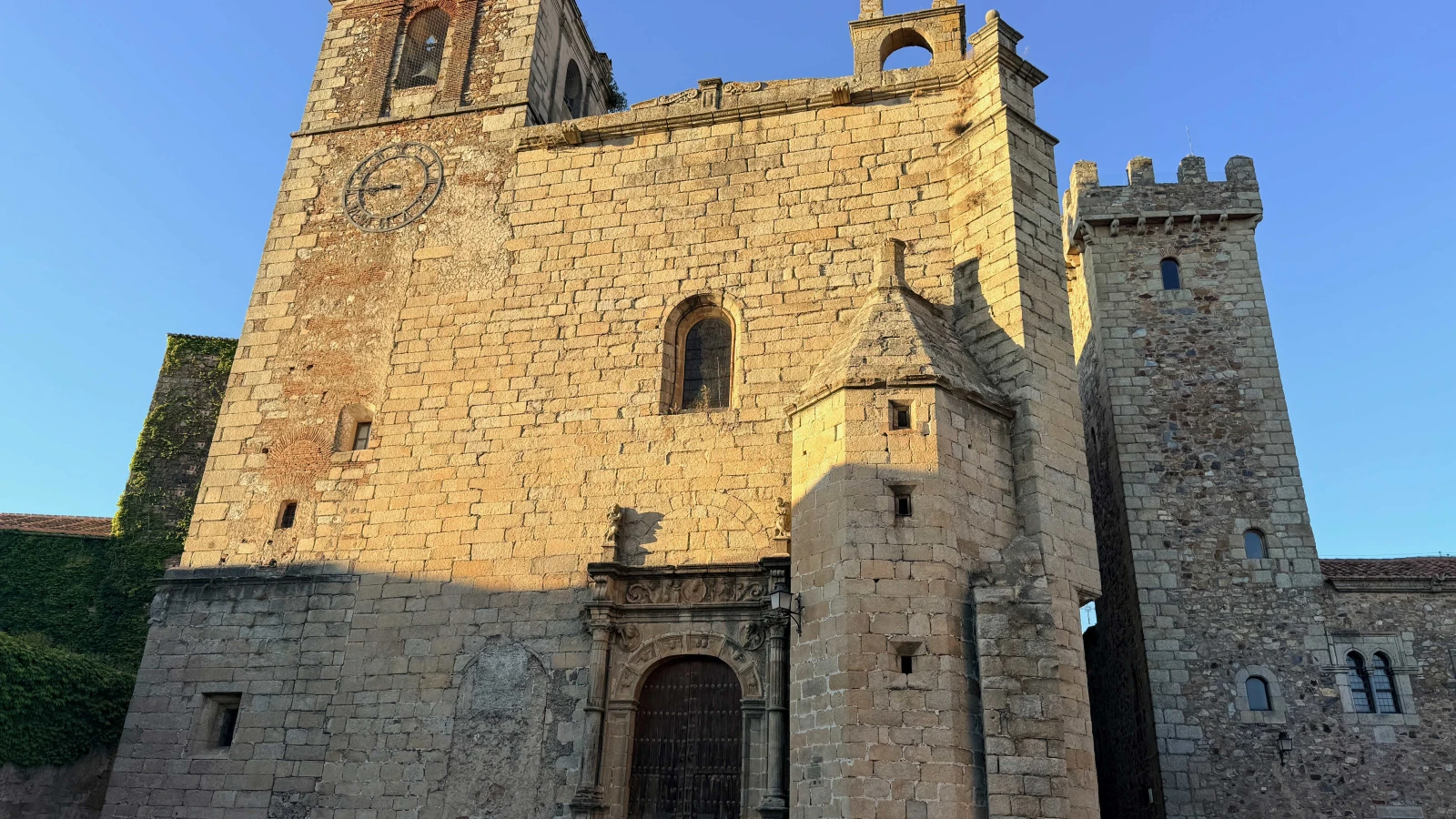
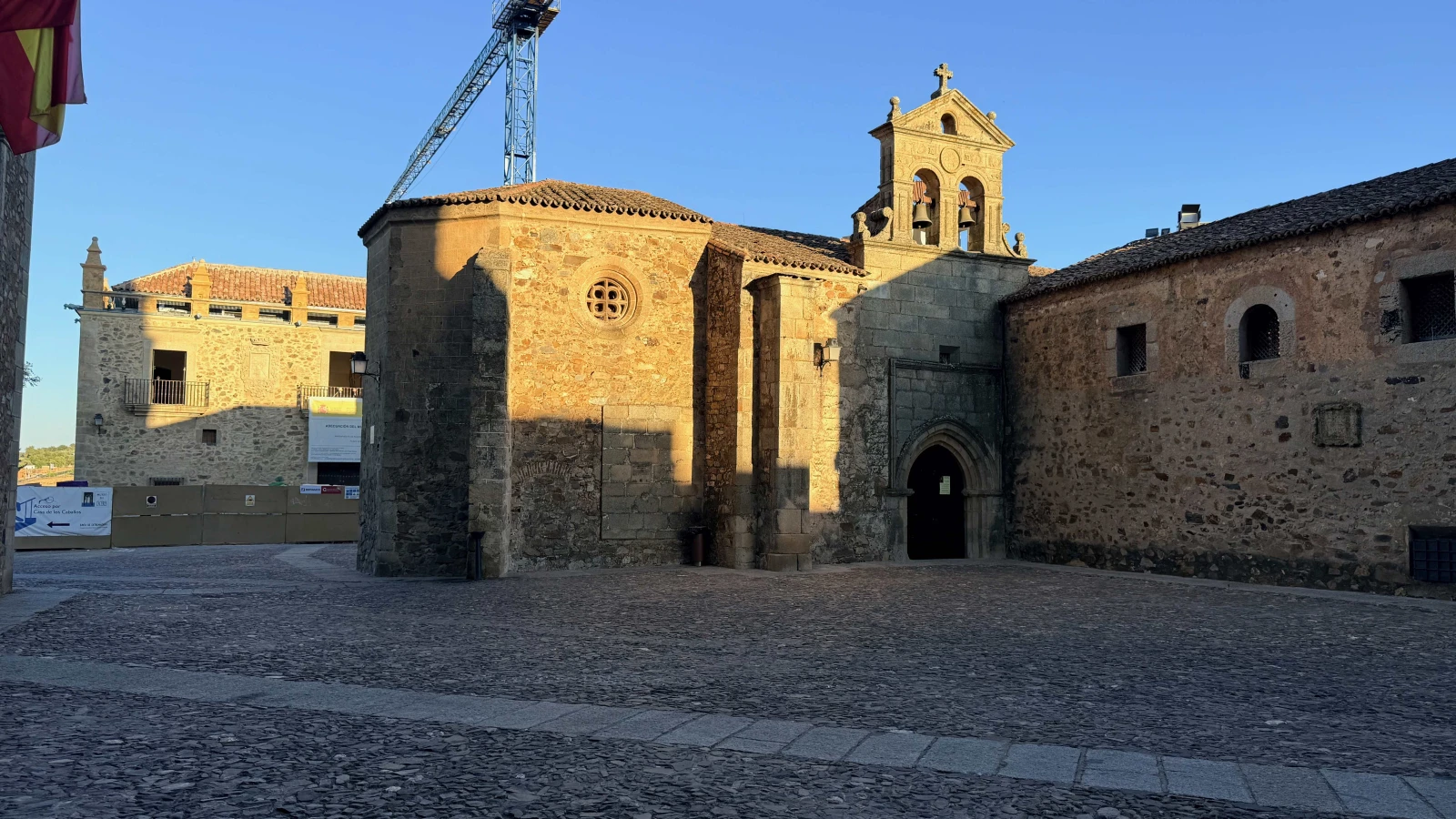
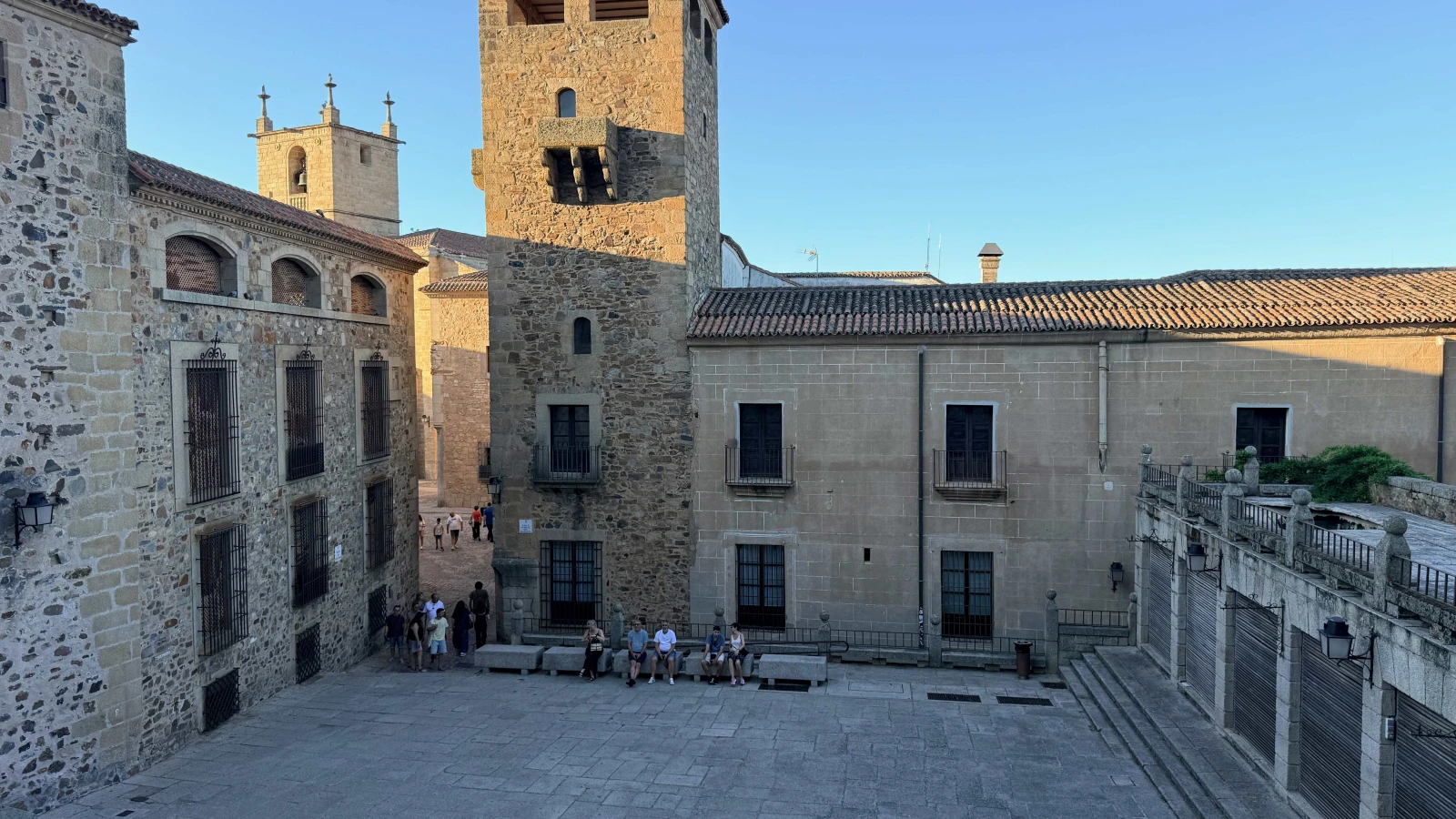
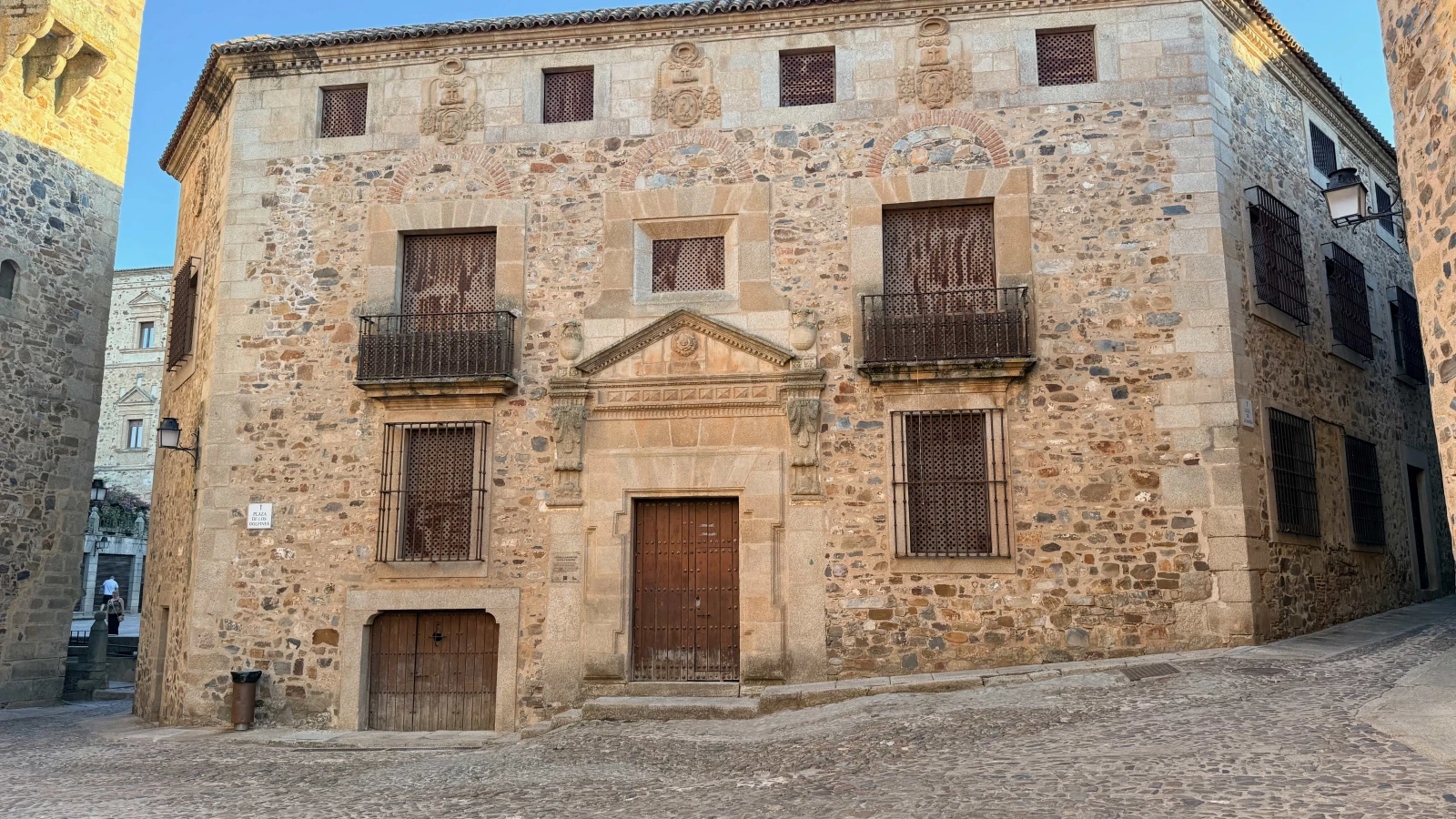
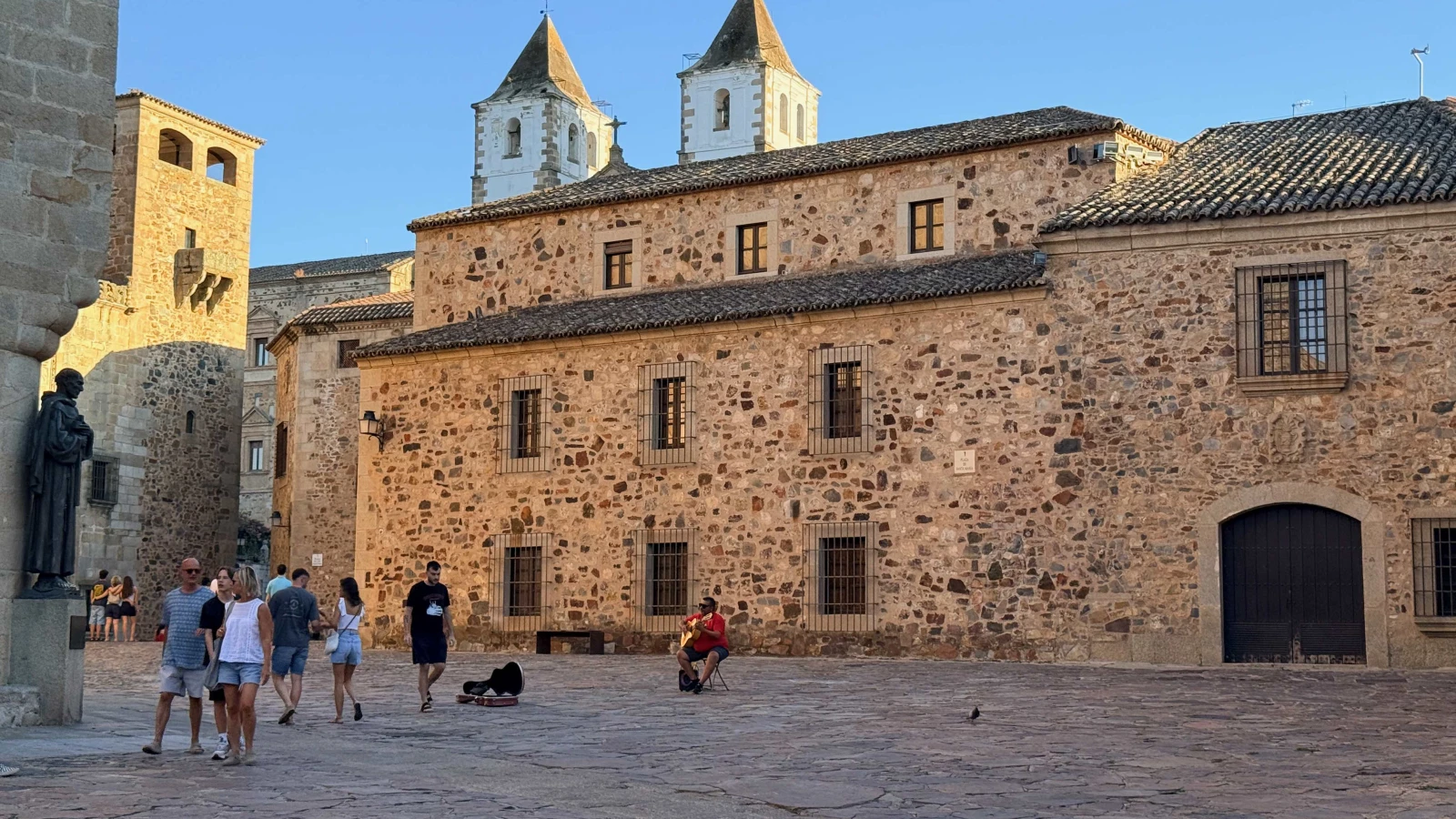
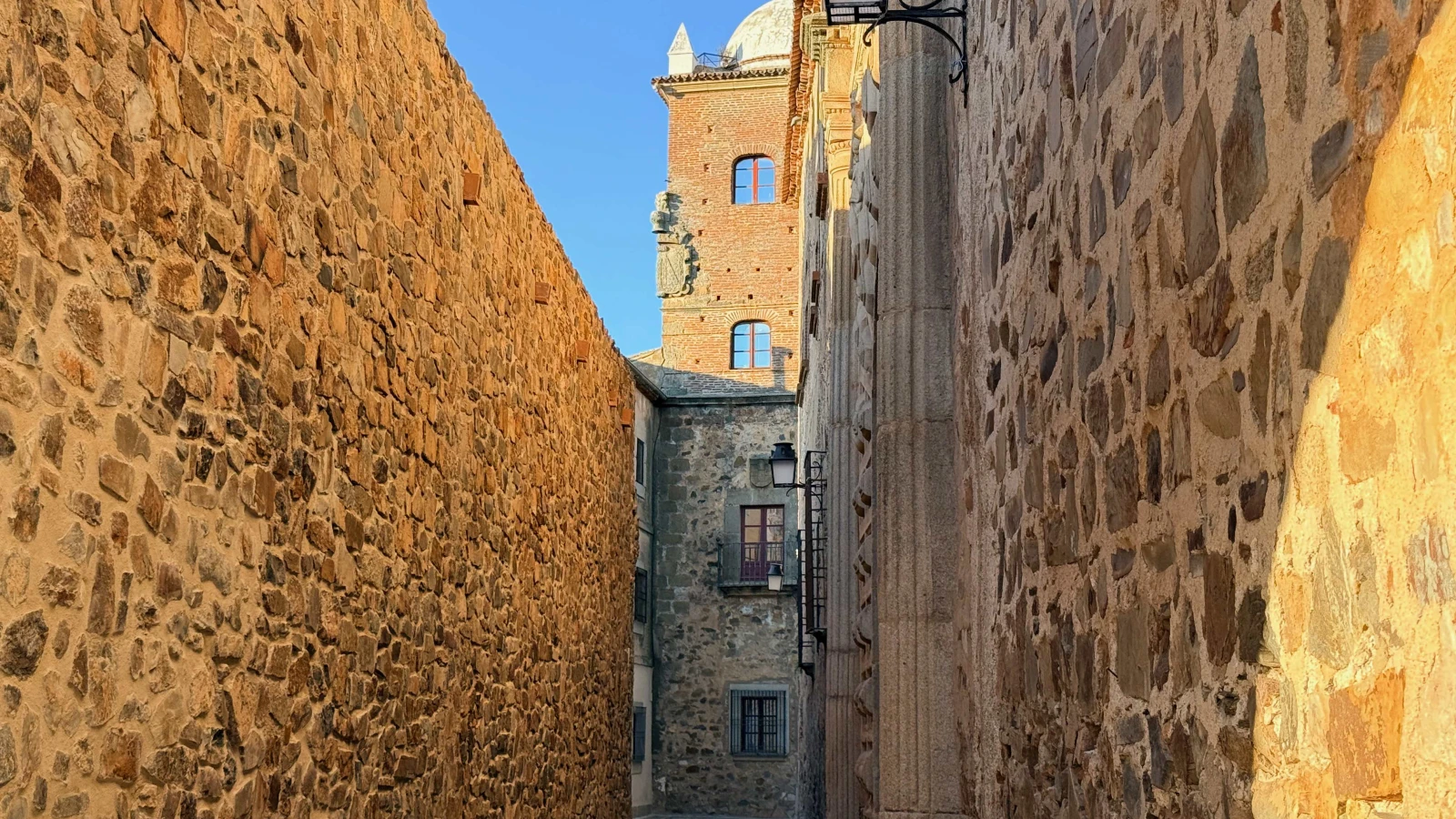
Hardly through the arch, the ground underfoot changes — no more asphalt, only stone, uneven and light and worn smooth by eight centuries of shoes. The Ciudad Monumental of Cáceres is one of the best-preserved medieval and Renaissance old towns in Europe, and the reason for that is almost embarrassingly simple: For a long time, no one here had the money to tear anything down and build something new. So the noble houses remained, one next to the other, granite walls without shop windows, coats of arms carved above the doors, hardly a modern building breaking the line.
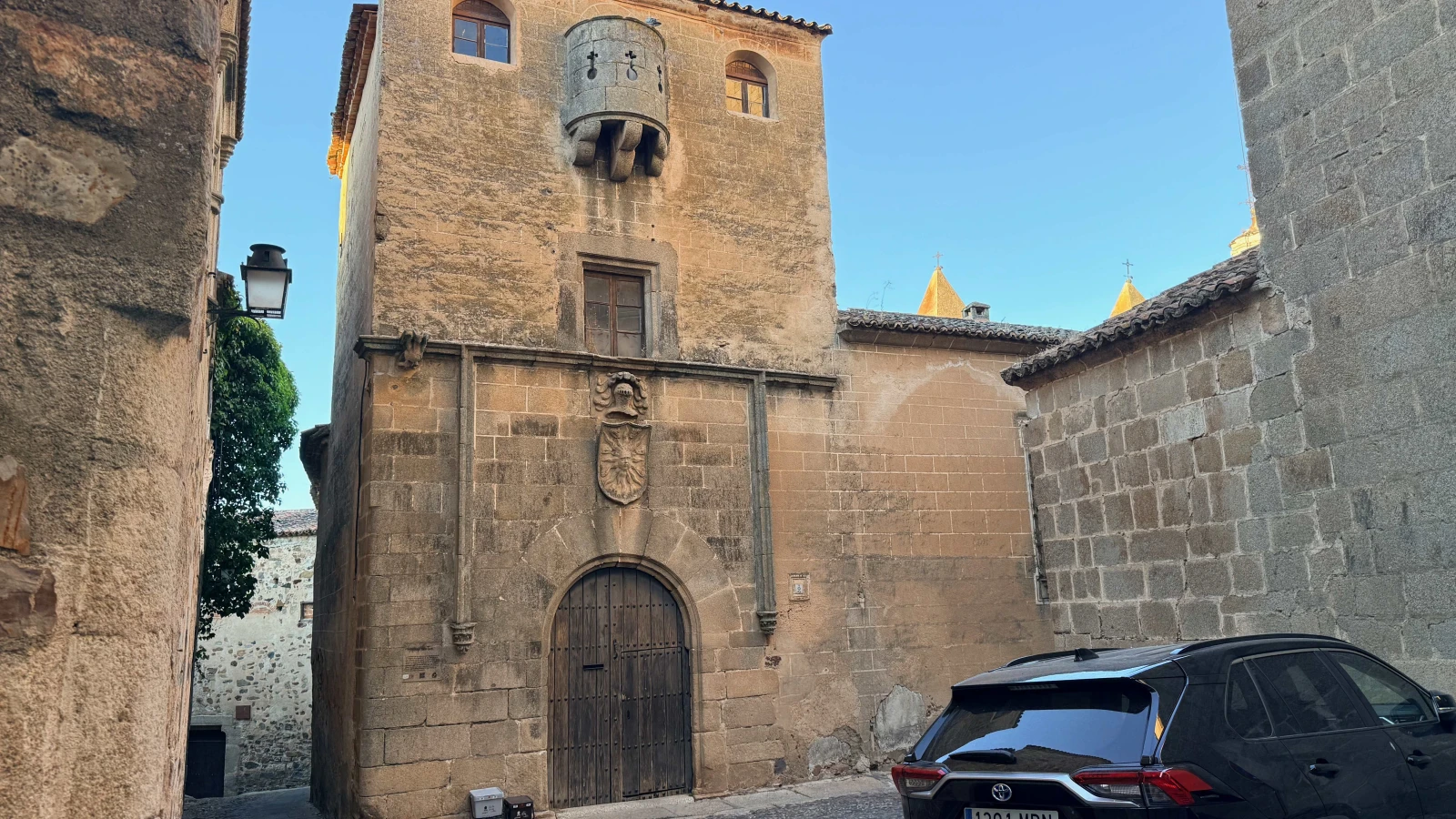
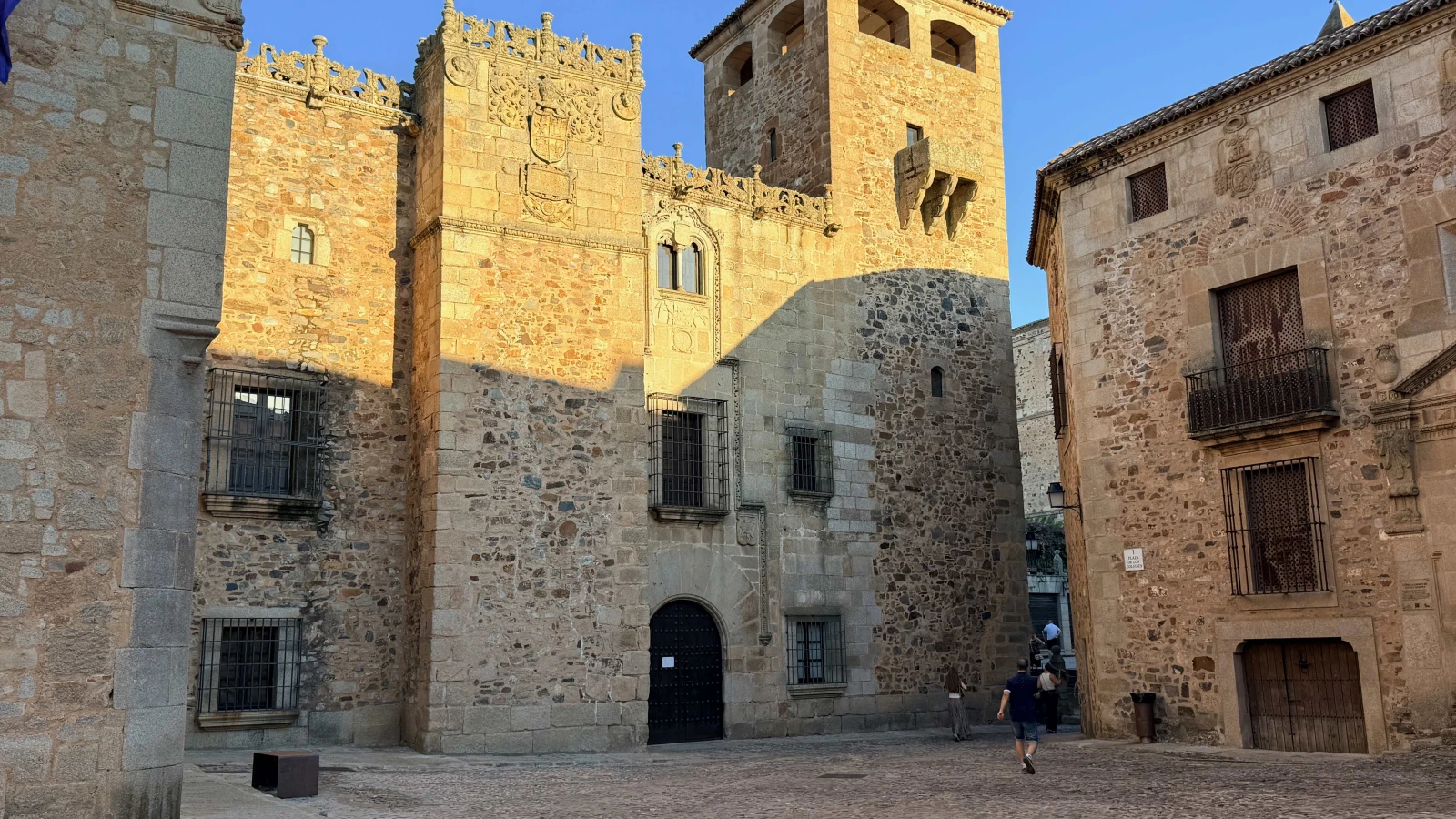
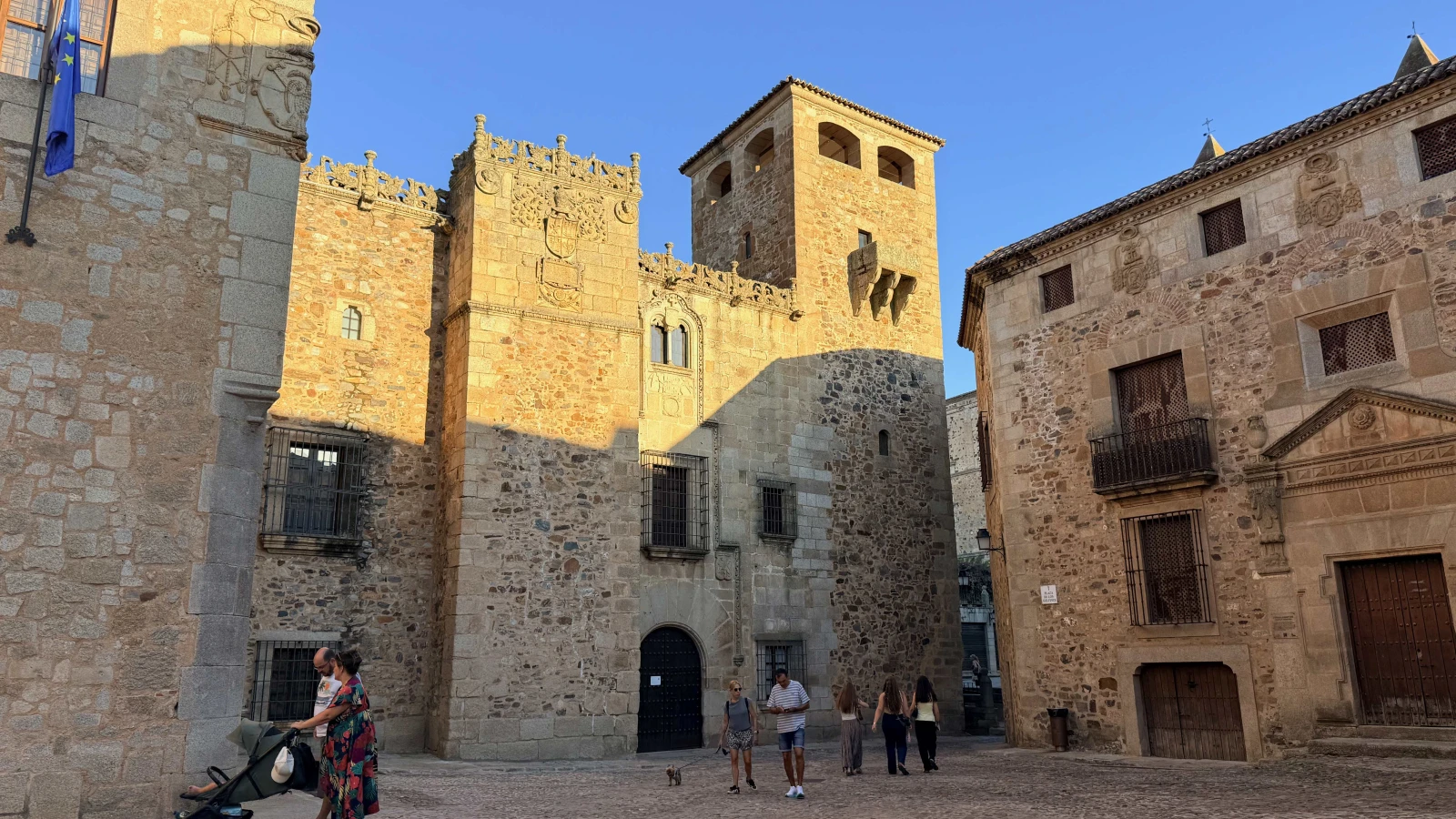
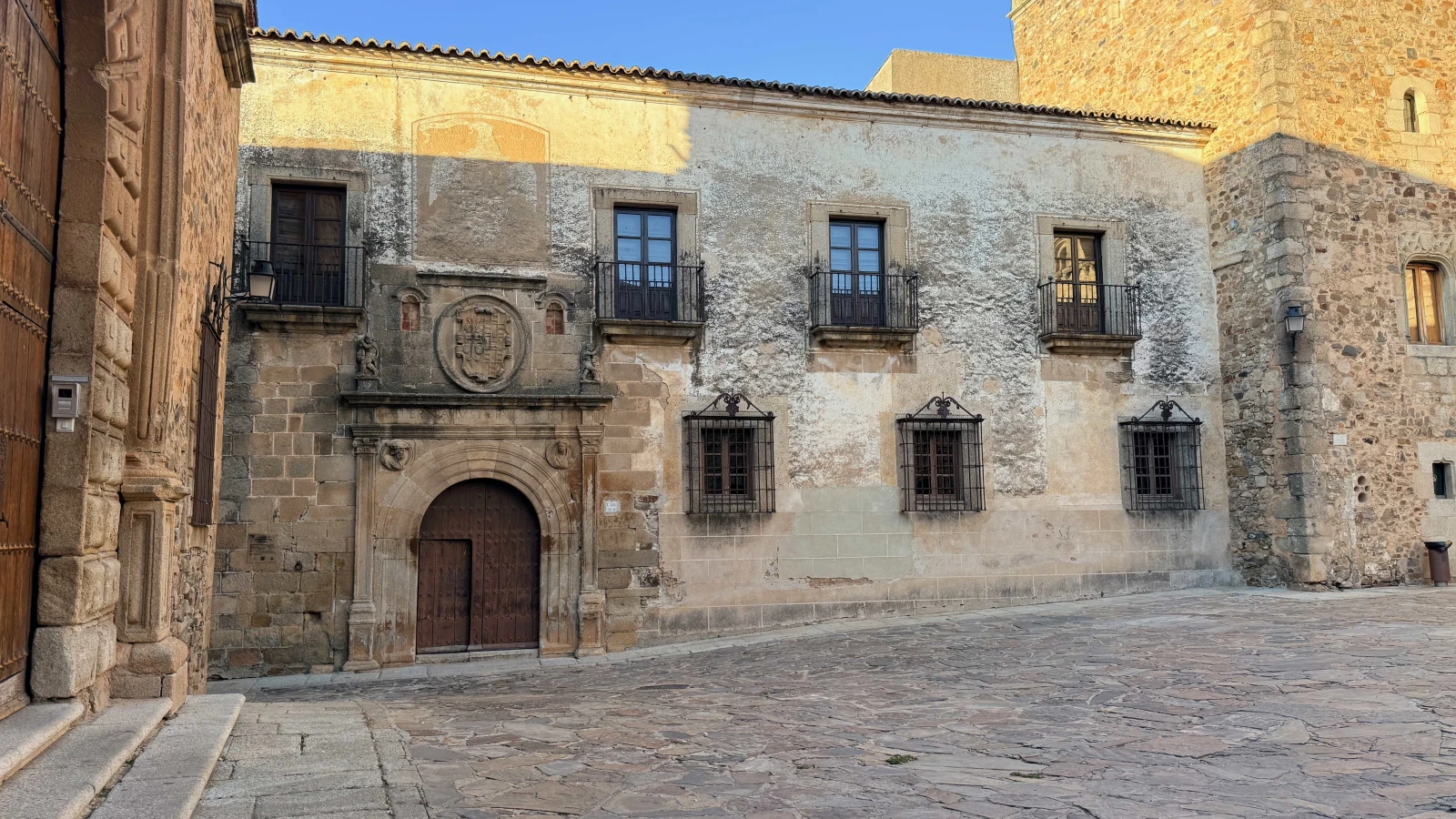
We stroll without a particular destination, past the Palacio de los Golfines de Abajo with its Renaissance windows, past chapels and cracked stone coats of arms, and I have to hold Zuky back at every doorstep, because a medieval town at dusk smells to a dog of a thousand years of cats.
A City of Quarreling Towers
You should know why these towers stand here, because it was not just for defense against external enemies. In the fifteenth century, the noble families of Cáceres — the Golfines, the Ovandos, the Solís — fought each other from these towers as much as against the Moors. It was called the Guerra de los Bandos, the War of the Parties, and it took place within the city walls, tower against tower, family against family.
When the Catholic Monarchs, Isabella and Ferdinand, finally imposed order at the end of the century, they had almost all these battlemented towers cut down so that no noble house could ever again barricade itself against its neighbors. Only one tower kept its full height and battlements: the Torre de las Cigüeñas, the Stork Tower, spared because the family that held it had remained loyal to the crown during the unrest. It still stands there today, a little higher than everything around it, and — of course — a stork’s nest sits on its top, as if the bird had exactly known which tower deserved to stand out.
The Judería
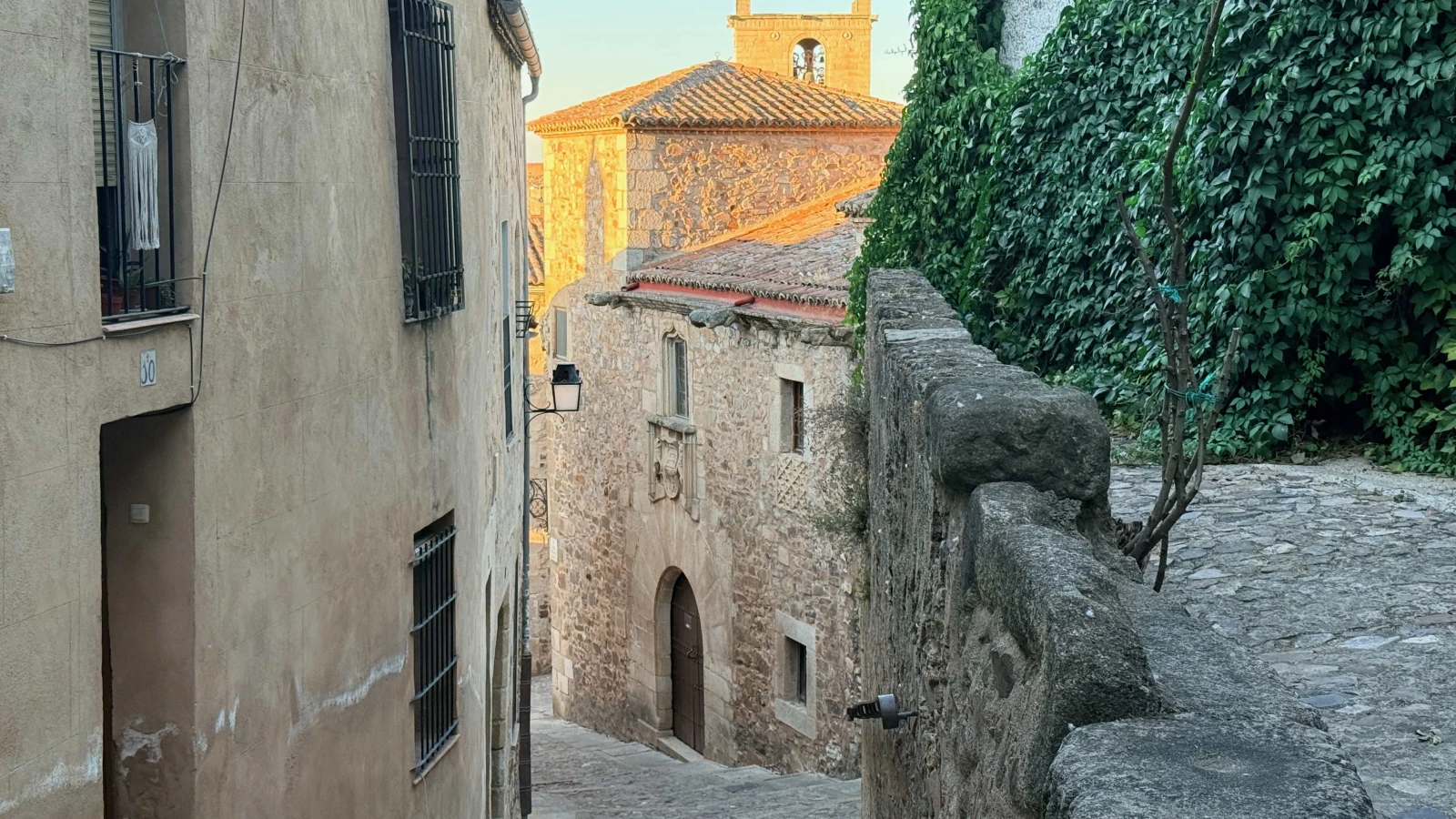
Below the noble quarter, on the southern slope of the hill, lies the former Jewish quarter, the Barrio de San Antonio — narrow alleys, low white houses, a completely different rhythm than the large stone above. Cáceres had before 1492 one of the largest Jewish communities in Extremadura, and although the synagogue has long since disappeared, the street layout itself has hardly changed: alleys too narrow for two people to pass without one stepping aside, just as laid out seven hundred years ago. Zuky fits through effortlessly. I have to turn my shoulders.
What Has Changed
For most of the twentieth century, Cáceres was a well-kept secret, admired by architects and medievalists and overlooked by almost everyone else. That has changed, and quickly.
In 1986, UNESCO added the old town to the World Heritage list, the same year as Ávila and a full seven years before Mérida. That gave the city a reason, and eventually the means, not only to preserve but to restore — roofs, facades, the wall itself, stone by stone regained over the following decades.
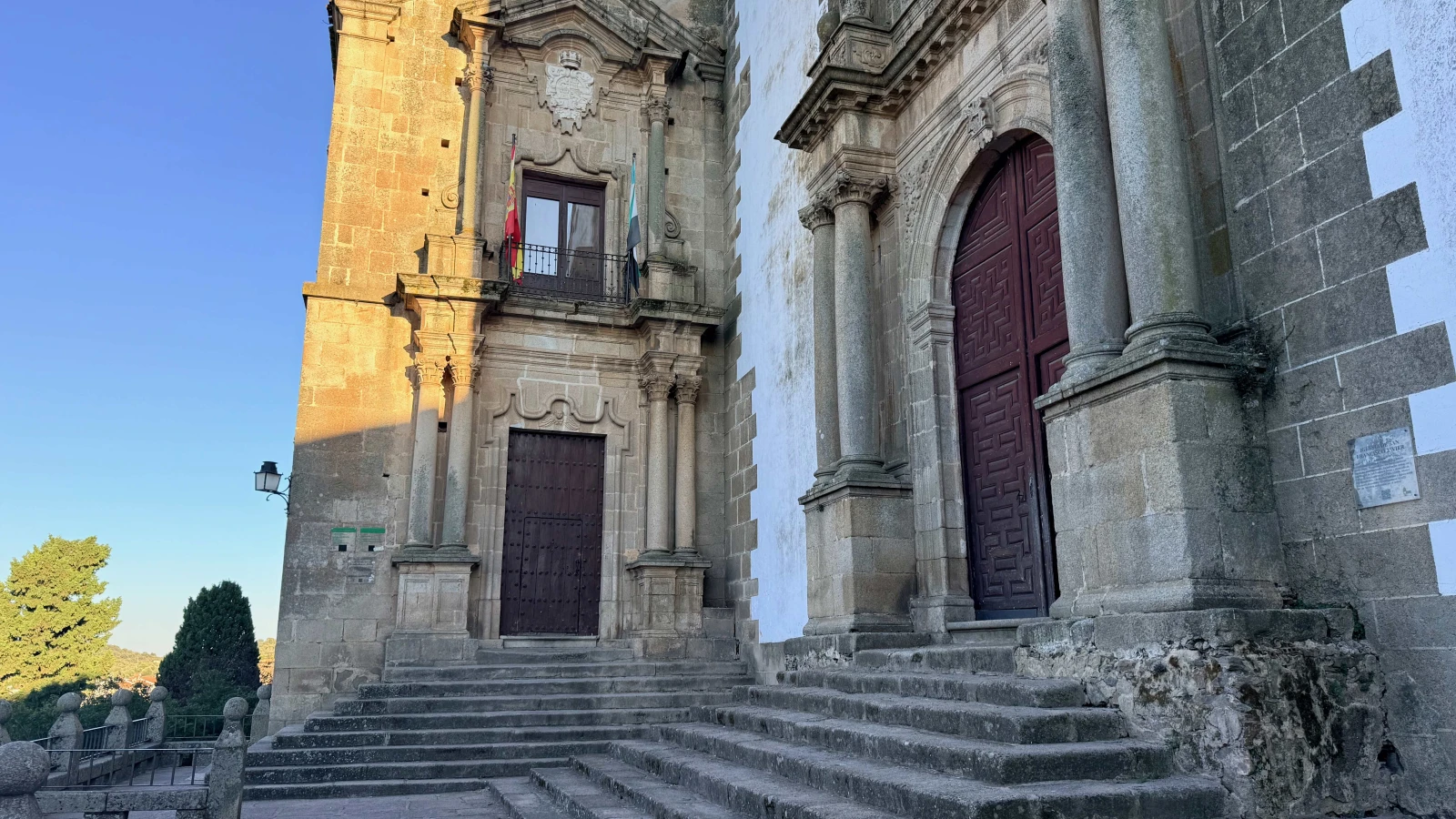
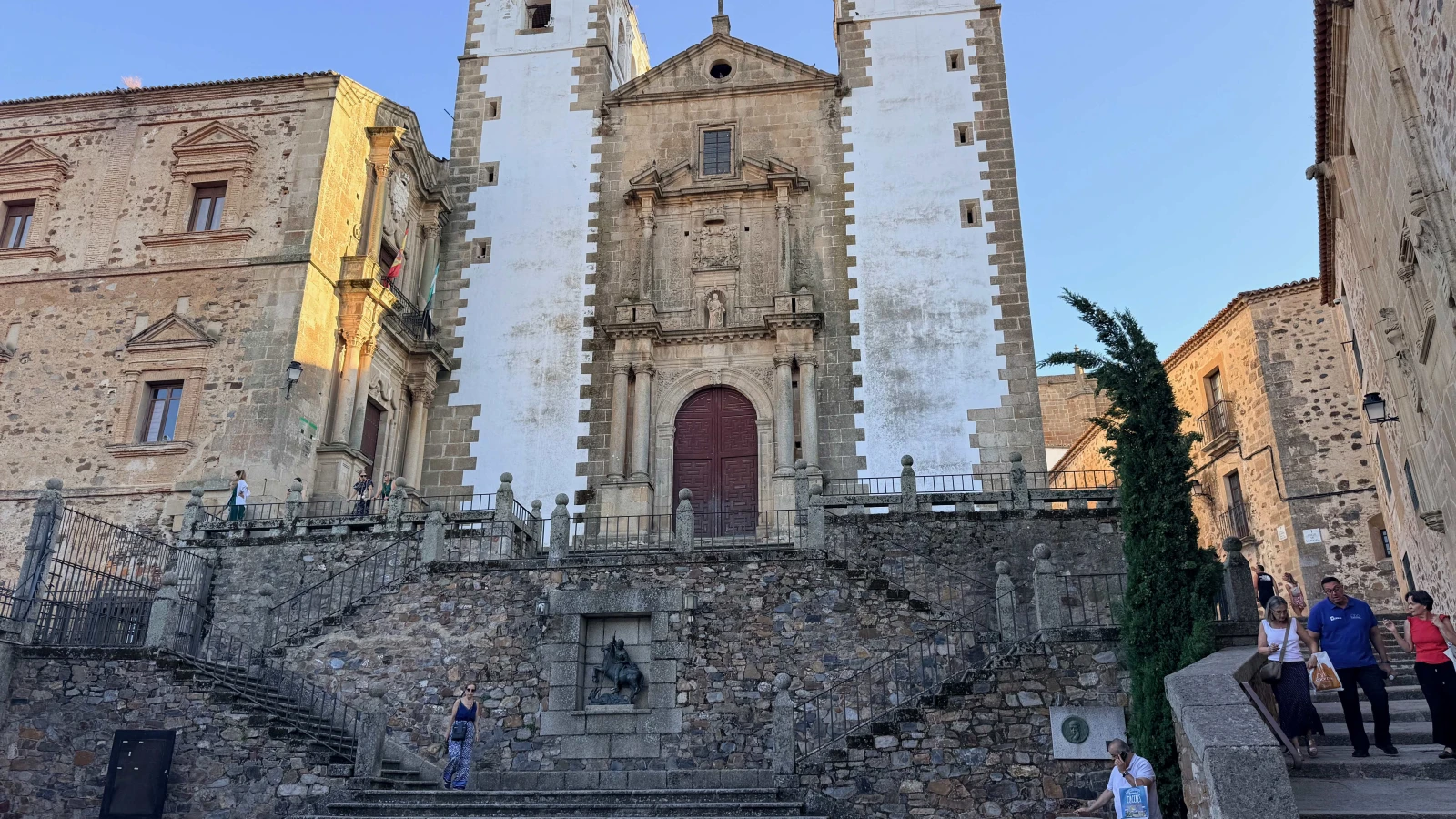
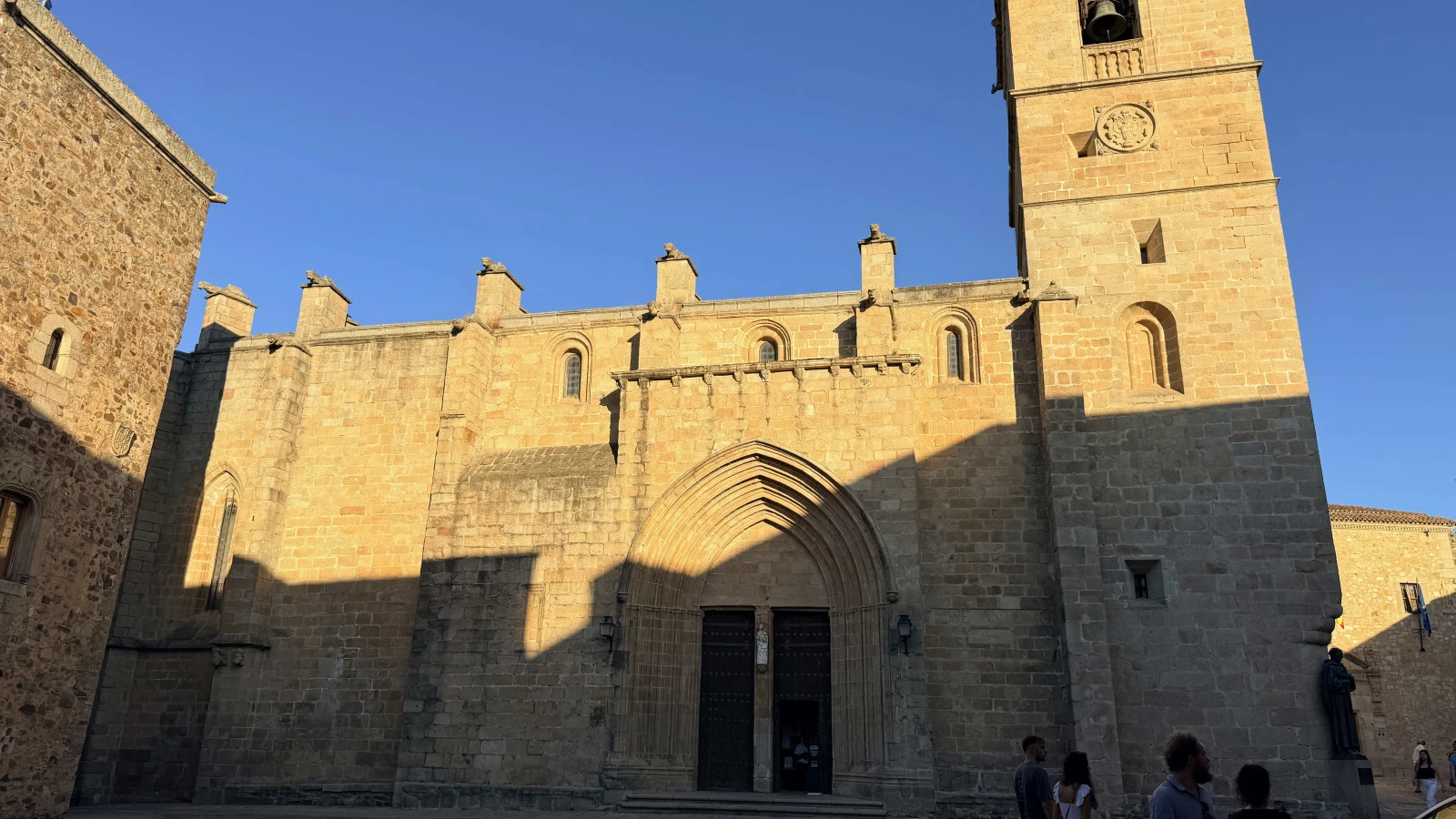
Then, in 2016, TV crews came and transformed the Plaza de Santa María and the streets around the concatedral for two seasons into King’s Landing for a fantasy series watched by half the world. Overnight, a city that tourists used to pass by on the way to Madrid or Seville became a destination around which trips were planned. The figures show it to this day: overnight stays in Cáceres have been rising since then, and the old town, which used to be almost empty from six in the evening, now has occupied restaurant tables until midnight.
The city has used the attention well. Atrio, right next to Plaza San Mateo, holds two Michelin stars in a hotel built into the old city wall — proof that such an old place can still set a table that no one would have expected. Every May, the WOMAD festival fills the same squares we walked through this evening with music from every continent, storks and loudspeakers side by side. A university faculty keeps a young population in a city that could easily have become a pure open-air museum. And through all this, the walls still stand exactly where the Almohads and the Golfines left them.
Tomorrow We Move On
It is now really dark, and the towers are lit from below, golden against a sky that has not quite given up the day’s heat. The storks stand still and silent on their chimneys and bell towers, as they do at night, on one leg, as if none of this concerned them — the feuds, the TV crews, the tourists, the ice cream. In a way, they are right. They were already there before the Golfines built their tower, and they will still be there when we move on tomorrow.
Zuky has stopped hypnotizing me; the ice cream is long gone, cone and all. He now lies stretched out on the bench and watches the square, like old dogs watch squares, half awake, the rest already dreaming. Tomorrow we travel to the next city, but tonight, exceptionally, we don’t have to be anywhere else.
Practical Information for Travelers with Dogs
• The Plaza Mayor and the alleys of the old town are pedestrian zones and dog-friendly; the cobblestones are uneven and hard on paws in summer heat, with hardly any shade until evening.
• Ice cream parlors around the Plaza Mayor are used to dogs waiting outside — better to ask before feeding a leftover bite; some cafés gladly offer a small bowl of water instead.
• The Concatedral de Santa María and the noble palaces are generally not accessible to dogs, except for assistance dogs; the streets, arches, and squares around them are all open.
• Storks nest roughly from February to August on towers throughout the old town — best observed at dusk from the Plaza Mayor when they return to their nests.
• Arrival: Cáceres lies on the Madrid–Badajoz railway line as well as on the A-66/A-58 highways; the old town can be fully explored on foot from the Plaza Mayor, uphill.
Rainer Schmitz




Comments